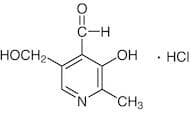
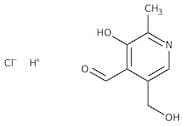
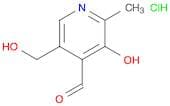
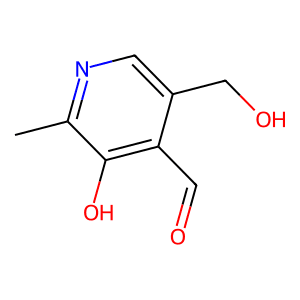
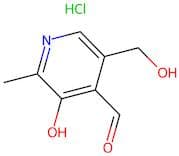
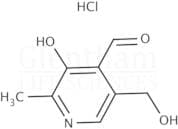
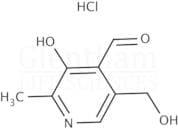
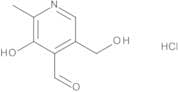
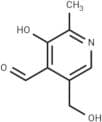
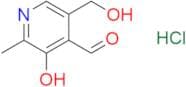
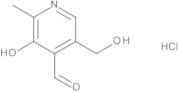
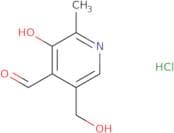
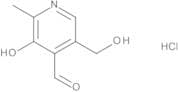
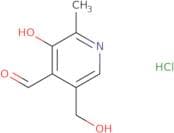
CAS 65-22-5
:Pyridoxal, hydrochloride
- 2-Methyl-3-hydroxy-4-formyl-5-hydroxymethylpyridine hydrochloride
- 3-Hydroxy-5-(Hydroxymethyl)-2-Methylpyridine-4-Carbaldehyde Hydrochloride (1:1)
- 3-Hydroxy-5-(hydroxymethyl)-2-methyl-4-pyridinecarboxaldehyde hydrochloride
- 3-Hydroxy-5-(hydroxymethyl)-2-methylpyridine-4-carbaldehyde hydrochloride
- 3-Hydroxy-5-hydroxymethyl-2-methylisonicotinaldehyde hydrochloride
- 4-Pyridinecarboxaldehyde, 3-hydroxy-5-(hydroxymethyl)-2-methyl-, hydrochloride
- 4-Pyridinecarboxaldehyde, 3-hydroxy-5-(hydroxymethyl)-2-methyl-, hydrochloride (1:1)
- Piridoxal, Clorhidrato
- Pyridoxal Hcl Sigma Grade Crystalline
- Pyridoxal, chlorhydrate
- Pyridoxalhydrochlorid
- See more synonyms
Pyridoxal Hydrochloride
CAS:Formula:C8H9NO3·HClPurity:>98.0%(T)(HPLC)Color and Shape:White to Light yellow powder to crystalMolecular weight:203.62Pyridoxal hydrochloride, 99%
CAS:Pyridoxal hydrochloride is used in labeling of amino acids for their detection. It finds application in neurotransmitters, sphingolipids and aminolevulinic acid. It is also used as a nutritional agent. It is also applied in research studies like biochemical, drugs and in media supplements. This ThFormula:C8H10ClNO3Purity:99%Color and Shape:White to cream, powderMolecular weight:203.624-Pyridinecarboxaldehyde, 3-hydroxy-5-(hydroxymethyl)-2-methyl-, hydrochloride (1:1)
CAS:Formula:C8H10ClNO3Purity:98%Color and Shape:SolidMolecular weight:203.6229Pyridoxal HCl
CAS:Formula:C8H9NO3·HClColor and Shape:White To Off-White SolidMolecular weight:167.16 36.46Pyridoxal hydrochloride, 98%
CAS:Formula:C8H9NO3·HClPurity:(HPLC) ≥ 98.0%Color and Shape:White to off-white powderMolecular weight:203.63Pyridoxal hydrochloride
CAS:Formula:C8H9NO3·HClPurity:≥ 98.5%Color and Shape:White, off-white or pale yellow crystalline powderMolecular weight:203.63Pyridoxal Hydrochloride
CAS:Controlled ProductFormula:C8H9NO3·ClHColor and Shape:NeatMolecular weight:203.62Pyridoxal hydrochloride
CAS:Vitamin B6 derivative, 4-carboxyaldehyde, becomes pyridoxal phosphate, key for amino acids, neurotransmitters, sphingolipids, aminolevulinic acid synthesis.Formula:C8H10ClNO3Purity:99.47%Color and Shape:Off-White PowderMolecular weight:203.62Pyridoxal Hydrochloride
CAS:Controlled ProductApplications Pyridoxal is one of the three natural forms of vitamin B6, along with pyridoxamine and pyridoxine. All of these forms are converted in the human body into a single biologically active form, Pyridoxal 5-phosphate (P991715). Green plants are a natural source of Pyridoxal, and its deficiency in the human body can lead to serious complications such as epilepsy and seizures.
References Folch, J., et al.: J. Biol. Chem., 226, 497 (1957); Chattopadhyay, M., et al.: J. Biosci., 28, 363 (2003); Broadbent, J., et al.: J. Bacteriol. 192, 2445 (2010); Budinich, M., et al.: J. Dairy Sci., 94, 5263 (2011);Formula:C8H9NO3·ClHColor and Shape:Beige To Light BrownMolecular weight:203.623-Hydroxy-5-(hydroxymethyl)-2-methylisonicotinaldehyde hydrochloride
CAS:Formula:C8H10ClNO3Purity:95.0%Color and Shape:Solid, White to slightly pale yellowMolecular weight:203.62Pyridoxal galactoside
CAS:Pyridoxal galactoside is a synthetic carbohydrate that is glycosylated and methylated. It is soluble in water and sparingly soluble in ethanol and acetone. Pyridoxal galactoside has a CAS number of 644-88-2. The chemical formula for pyridoxal galactoside is C6H7NO3, with a molecular weight of 171.12 g/mol. This product can be custom synthesized to meet customer specifications.Formula:C14H19O8NPurity:Min. 95%Color and Shape:Pale brown solid.Molecular weight:329.31 g/molPyridoxal hydrochloride 100 µg/mL in Methanol
CAS:Controlled ProductFormula:C8H9NO3·ClHColor and Shape:Single SolutionMolecular weight:203.62Pyridoxal hydrochloride
CAS:Pyridoxal hydrochloride is a vitamin B6 metabolite. It is involved in many biochemical reactions, including trans-sulfuration, amino acid synthesis, and neurotransmitter synthesis. Pyridoxal hydrochloride has been shown to have antimicrobial activity against some bacteria species by inhibiting their enzyme activities. This compound also inhibits the growth of various fungi. The redox potentials of pyridoxal hydrochloride can be determined by titration calorimetry, which can be used to study its structural properties. In vitro experiments with cells have shown that pyridoxal hydrochloride may increase the efficiency of protein production when used during cell transfection. Toxicity studies have shown that pyridoxal hydrochloride is not toxic to humans at doses up to 2000 mg/kg body weight per day for up to 14 days.
Formula:C8H9NO3·HClPurity:Min. 98 Area-%Color and Shape:White PowderMolecular weight:203.62 g/mol