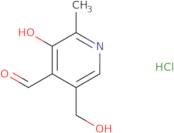
CAS 65-22-5
:Pyridoxal, hydrochloride
- 2-Methyl-3-hydroxy-4-formyl-5-hydroxymethylpyridine hydrochloride
- 3-Hydroxy-5-(Hydroxymethyl)-2-Methylpyridine-4-Carbaldehyde Hydrochloride (1:1)
- 3-Hydroxy-5-(hydroxymethyl)-2-methyl-4-pyridinecarboxaldehyde hydrochloride
- 3-Hydroxy-5-(hydroxymethyl)-2-methylpyridine-4-carbaldehyde hydrochloride
- 3-Hydroxy-5-hydroxymethyl-2-methylisonicotinaldehyde hydrochloride
- 4-Pyridinecarboxaldehyde, 3-hydroxy-5-(hydroxymethyl)-2-methyl-, hydrochloride
- 4-Pyridinecarboxaldehyde, 3-hydroxy-5-(hydroxymethyl)-2-methyl-, hydrochloride (1:1)
- Piridoxal, Clorhidrato
- Pyridoxal Hcl Sigma Grade Crystalline
- Pyridoxal, chlorhydrate
- Pyridoxalhydrochlorid
- See more synonyms
- Lower prices
- Higher prices
- Lower purities
- Higher purities
- Faster estimated delivery
Pyridoxal hydrochloride
CAS:Pyridoxal hydrochloride is a vitamin B6 metabolite. It is involved in many biochemical reactions, including trans-sulfuration, amino acid synthesis, and neurotransmitter synthesis. Pyridoxal hydrochloride has been shown to have antimicrobial activity against some bacteria species by inhibiting their enzyme activities. This compound also inhibits the growth of various fungi. The redox potentials of pyridoxal hydrochloride can be determined by titration calorimetry, which can be used to study its structural properties. In vitro experiments with cells have shown that pyridoxal hydrochloride may increase the efficiency of protein production when used during cell transfection. Toxicity studies have shown that pyridoxal hydrochloride is not toxic to humans at doses up to 2000 mg/kg body weight per day for up to 14 days.
Formula:C8H9NO3·HClPurity:Min. 98 Area-%Color and Shape:White PowderMolecular weight:203.62 g/molRef: 3D-FP31539
Discontinued product