CAS 65147-19-5
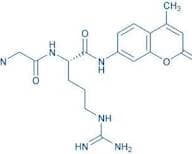
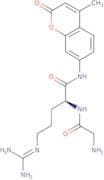
:H-Gly-Arg-AMC
Description:
H-Gly-Arg-AMC, also known as Glycyl-Arginine-7-amido-4-methylcoumarin, is a synthetic peptide substrate commonly used in biochemical research, particularly in studies involving proteases. This compound features a glycine (Gly) and arginine (Arg) amino acid sequence linked to a 7-amido-4-methylcoumarin (AMC) fluorophore, which allows for fluorescence-based detection upon cleavage by specific enzymes. The presence of the AMC group makes it highly sensitive for monitoring enzymatic activity, as the release of the fluorophore results in an increase in fluorescence intensity. H-Gly-Arg-AMC is typically utilized in assays to study proteolytic activity, providing insights into enzyme kinetics and substrate specificity. Its stability and solubility in aqueous solutions make it suitable for various experimental conditions. Additionally, the compound's structure allows for the exploration of interactions between enzymes and substrates, contributing to the understanding of biological processes and potential therapeutic targets.
Formula:C18H24N6O4
Synonyms:- Gly-Arg-7-Amino-4-Methylcoumarin
Sort by
Purity (%)
0
100
|
0
|
50
|
90
|
95
|
100
Found 2 products.
H-Gly-Arg-AMC
CAS:Sensitive fluorogenic substrate for dipeptidyl aminopeptidase I (DPP I, cathepsin C).Formula:C18H24N6O4Purity:> 99%Color and Shape:WhiteMolecular weight:388.43H-Gly-Arg-AMC hydrochloride salt
CAS:H-Gly-Arg-AMC hydrochloride salt is a substrate for the enzymes cathepsins B, H, and L. This compound has been used to measure protease activity in cell culture and as a diagnostic substrate for peptidases. The enzyme reaction can be monitored by measuring changes in the fluorescence of the product at 340 nm. The pH optimum for this enzyme is 7.4.
Formula:C18H24N6O4•HClPurity:Min. 98 Area-%Color and Shape:PowderMolecular weight:424.88 g/molRef: 3D-FG110503
Discontinued product