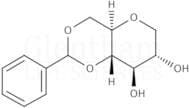
CAS 65190-39-8
:D-Glucitol,1,5-anhydro-4,6-O-(phenylmethylene)-
Description:
D-Glucitol, 1,5-anhydro-4,6-O-(phenylmethylene)-, also known by its CAS number 65190-39-8, is a chemical compound that belongs to the class of sugar alcohols and is derived from D-glucose. This compound features a unique structure characterized by the presence of an anhydro group and phenylmethylene substituents, which contribute to its chemical properties. It is typically a white to off-white crystalline solid, soluble in water and polar organic solvents, reflecting its hydroxyl groups' ability to engage in hydrogen bonding. The phenylmethylene groups enhance its hydrophobic characteristics, potentially influencing its reactivity and interactions in biological systems. D-Glucitol derivatives are often studied for their potential applications in pharmaceuticals, food science, and as sweeteners due to their lower caloric content compared to traditional sugars. Additionally, the compound may exhibit specific biological activities, making it of interest in various research fields, including medicinal chemistry and biochemistry. Its stability and reactivity can be influenced by environmental factors such as pH and temperature.
Formula:C13H16O5
Synonyms:- Sorbitol,1,5-anhydro-4,6-O-benzylidene- (6CI)
- Pyrano[3,2-d]-1,3-dioxin, D-glucitolderiv.
Sort by
Purity (%)
0
100
|
0
|
50
|
90
|
95
|
100
Found 2 products.
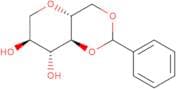
1,5-Anhydro-4,6-O-benzylidene-D-glucitol
CAS:1,5-Anhydro-4,6-O-benzylidene-D-glucitol is a type of d-mannitol that is used as an intermediate in organic chemistry. It can be converted to a number of other compounds such as epoxides and nucleophilic agents. 1,5-Anhydro-4,6-O-benzylidene-D-glucitol is also an inhibitor of thrombin. It has been shown to inhibit the activity of trypsin and epoxide by forming hydrogen bonds with the enzyme's active sites. This molecule has been studied using molecular modeling and simulations with axial hydrogens found on the purine ring. In addition, 1,5-Anhydro-4,6-O-benzylidene -D -glucitol can be synthesized in organic chemistry through different routes. One method starts from dibenzoylmethane and 3-(Formula:C13H16O5Purity:Min. 95%Color and Shape:PowderMolecular weight:252.26 g/mol