CAS 65207-55-8
:D-lactal
Description:
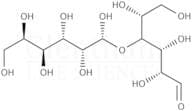
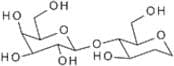
D-lactal, also known as D-lactic acid lactone, is a cyclic ester derived from D-lactic acid. It is characterized by its colorless to pale yellow liquid form and has a slightly sweet odor. D-lactal is soluble in water and organic solvents, making it versatile for various applications. Its molecular structure features a lactone ring, which contributes to its stability and reactivity. D-lactal is primarily used in the food industry as a flavoring agent and preservative, as well as in pharmaceuticals and biopolymers due to its biodegradable properties. Additionally, it can serve as a building block for the synthesis of more complex organic compounds. The substance is generally recognized as safe when used appropriately, but like many organic compounds, it should be handled with care to avoid potential health risks. Overall, D-lactal's unique properties make it an important compound in both industrial and research settings.
Formula:C12H20O9
InChI:InChI=1/C12H20O9/c13-3-6-8(16)9(17)10(18)12(20-6)21-11-5(15)1-2-19-7(11)4-14/h1-2,5-18H,3-4H2/t5-,6-,7-,8+,9+,10-,11+,12+/m1/s1
Synonyms:- 1,5-anhydro-2-deoxy-4-O-beta-D-galactopyranosyl-D-arabino-hex-1-enitol
Sort by
Purity (%)
0
100
|
0
|
50
|
90
|
95
|
100
Found 3 products.
1,5-Anhydro-2-deoxy-4-O-β-D-galactopyranosyl-D-arabino-hex-1-enitol
CAS:Formula:C12H20O9Purity:97%Molecular weight:308.2818D-Lactal
CAS:D-Lactal is a dibutyltin oxide that is used in the synthesis of n-acetyllactosamine, disaccharides and trisaccharides. D-Lactal has been shown to have high resistance to chloride ion, which is one of the most common reagents for cleavage. It can also be used as a synthetic precursor for other glycoside derivatives by reacting with triflic acid or trisaccharide. Triflic acid and trisaccharide react with chloride to form a stereoselective glycosidic bond. D-Lactal is also able to bind lectins, carbohydrate chemistry and carbohydrate chemistry reagents.Formula:C12H20O9Purity:Min. 95%Color and Shape:White/Off-White SolidMolecular weight:308.28 g/mol