CAS 65358-15-8
:PSEUDOTHYMIDINE
Description:
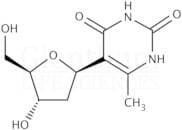
Pseudothymidine, with the CAS number 65358-15-8, is a nucleoside analog that resembles thymidine, a component of DNA. It is characterized by its structural modifications that allow it to interact with nucleic acid synthesis pathways. Pseudothymidine typically exhibits properties such as solubility in polar solvents, which is common for nucleosides, and it may have specific biological activities, including potential antiviral or anticancer effects, due to its ability to interfere with DNA replication. The compound's molecular structure includes a sugar moiety and a nucleobase, which are essential for its function in biological systems. Its pharmacological profile may involve mechanisms of action similar to those of other nucleoside analogs, potentially leading to the inhibition of viral replication or cancer cell proliferation. As with many chemical substances, the safety and handling of pseudothymidine require careful consideration, particularly in laboratory or therapeutic contexts. Further research is often necessary to fully elucidate its biological effects and potential applications in medicine.
Formula:C10H14N2O5
Synonyms:- 5-(2-Deoxy-beta-D-erythro-pentofuranosyl)-1-methyl-2,4(1H,3H)-pyrimidinedione
- 2,4(1H,3H)-Pyrimidinedione, 5-(2-deoxy-β-D-erythro-pentofuranosyl)-1-methyl-
- PSEUDOTHYMIDINE
- 5-Methyl-2'-Deoxypseudouridin
Sort by
Purity (%)
0
100
|
0
|
50
|
90
|
95
|
100
Found 3 products.
Pseudothymidine
CAS:Pseudothymidine is a C-nucleoside analog of thymidine.Formula:C10H14N2O5Purity:98%Color and Shape:SolidMolecular weight:242.23Pseudothymidine
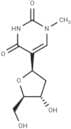
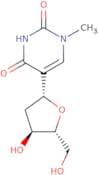
CAS:Pseudothymidine is the nucleobase analog of thymidine. It is a synthetic substance that has been used in the polymerase chain reactions (PCRs) to form DNA molecules. Pseudothymidine is not naturally found in cells and can be used as a substitute for thymidine during PCR to make more copies of DNA sequences. It has been shown that pseudothymidine can be incorporated into DNA without disrupting the polymerase chain reaction. The thermal denaturation of pseudothymidine is 10 °C lower than that of thymidine, allowing it to be used at higher temperatures with less risk of degradation.Formula:C10H14N2O5Purity:Min. 95%Color and Shape:PowderMolecular weight:242.23 g/mol