CAS 65868-63-5
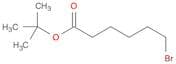
:Hexanoic acid, 6-bromo-, 1,1-dimethylethyl ester
Description:
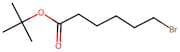
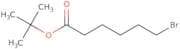
Hexanoic acid, 6-bromo-, 1,1-dimethylethyl ester, with the CAS number 65868-63-5, is an organic compound characterized by its ester functional group derived from hexanoic acid and a bromo substituent at the sixth carbon position. This compound typically exhibits a moderate molecular weight and is likely to be a colorless to pale yellow liquid at room temperature. Its structure includes a branched alkyl group, which can influence its physical properties, such as boiling point and solubility. Hexanoic acid derivatives are known for their applications in the production of surfactants, lubricants, and as intermediates in organic synthesis. The presence of the bromine atom may impart unique reactivity, making it useful in various chemical reactions, including nucleophilic substitutions. Additionally, the compound's ester nature suggests it may have a pleasant odor, characteristic of many esters, and it may be soluble in organic solvents while being less soluble in water. Safety data should be consulted for handling and potential hazards associated with this compound.
Formula:C10H19BrO2
Sort by
Purity (%)
0
100
|
0
|
50
|
90
|
95
|
100
Found 4 products.
tert-Butyl 6-bromohexanoate
CAS:Formula:C10H19BrO2Purity:95%Color and Shape:LiquidMolecular weight:251.1607Ref: IN-DA0038K0
1g25.00€5g43.00€10g60.00€1kgTo inquire25g88.00€100g187.00€250g614.00€500gTo inquire100mg21.00€250mg21.00€tert-Butyl 6-bromohexanoate
CAS:Formula:C10H19BrO2Purity:96%Color and Shape:LiquidMolecular weight:251.164Ref: 10-F097928
1g13.00€5g28.00€10g39.00€25g72.00€50g129.00€100g247.00€500g1,090.00€100mg9.00€250mg12.00€tert-Butyl 6-bromohexanoate
CAS:Tert-Butyl 6-bromohexanoate is an intermediate in the synthesis of a variety of organic compounds, including pharmaceuticals. It is also used as a reagent for various reactions and as a solvent in chemical syntheses. Tert-Butyl 6-bromohexanoate can be used to generate other chemicals through the following reactions: 1) Organic Synthesis 2) Addition of Grignard Reagents 3) Reduction of Ketones 4) Alkylation with Bromides 5) Dehydration with HBr 6) Conversion to Halides 7) Reduction of Esters 8) Oxidation with PCC or MCPBA 9) Conversion to Nitriles 10) The Williamson ReactionFormula:C10H19BrO2Purity:Min. 95%Molecular weight:251.16 g/mol