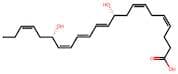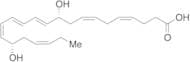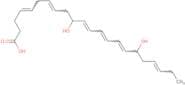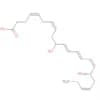
CAS 660430-03-5
:Neuroprotectin D1
Description:
Neuroprotectin D1 (NPD1) is a bioactive lipid mediator derived from docosahexaenoic acid (DHA), an omega-3 fatty acid. It plays a crucial role in neuroprotection, particularly in the context of neurodegenerative diseases and brain injury. NPD1 is known for its anti-inflammatory properties and its ability to promote cell survival in neuronal cells. It is involved in the resolution of inflammation and the maintenance of cellular homeostasis, contributing to the protection of neurons from oxidative stress and apoptosis. The compound is synthesized in the brain and has been studied for its potential therapeutic effects in conditions such as Alzheimer's disease, stroke, and retinal degeneration. NPD1 operates through specific signaling pathways, influencing gene expression and cellular responses. Its unique structure, characterized by a series of double bonds and functional groups, allows it to interact with various receptors and enzymes, facilitating its protective effects. Overall, Neuroprotectin D1 represents a significant area of research in neurobiology and therapeutic development for neurodegenerative disorders.
Formula:C22H32O4
InChI:InChI=1S/C22H32O4/c1-2-3-10-15-20(23)17-12-8-9-13-18-21(24)16-11-6-4-5-7-14-19-22(25)26/h3,5-13,17-18,20-21,23-24H,2,4,14-16,19H2,1H3,(H,25,26)/b7-5-,9-8+,10-3-,11-6-,17-12-,18-13+/t20-,21+/m0/s1
InChI key:InChIKey=CRDZYJSQHCXHEG-SFVBTVKNSA-N
SMILES:[C@H](/C=C/C=C/C=C\[C@H](C/C=C\CC)O)(C/C=C\C/C=C\CCC(O)=O)O
Synonyms:- Protectin D1
- (4Z,7Z,10R,11E,13E,15Z,17S,19Z)-10,17-Dihydroxy-4,7,11,13,15,19-docosahexaenoic acid
- 4,7,11,13,15,19-Docosahexaenoic acid, 10,17-dihydroxy-, (4Z,7Z,10R,11E,13E,15Z,17S,19Z)-
- NPD 1
- Neuroprotectin D1
Sort by
Purity (%)
0
100
|
0
|
50
|
90
|
95
|
100
Found 5 products.
Protectin d1
CAS:Protectin D1 is a protein that has shown potential as an anticancer agent. It is derived from the Chinese medicinal herb, Salvia miltiorrhiza. Protectin D1 has been found to induce apoptosis (cell death) in cancer cells and inhibit the activity of kinases, which are enzymes involved in cell cycle regulation and tumor growth. This protein has also been shown to have inhibitory effects on tumor growth in animal models. Protectin D1 analogs have been developed as potential kinase inhibitors for use in cancer therapy. These analogs have shown promising results in preclinical studies and may offer a new approach to treating various types of cancer. Additionally, Protectin D1 can be detected in urine, making it a potential biomarker for cancer diagnosis and prognosis.Formula:C22H32O4Purity:Min. 95%Molecular weight:360.5 g/molProtectin D1
CAS:Protectin D1 (Neuroprotectin D1) is a neuroprotectin produced by nerve cells and is a potential cardioprotective agent.Formula:C22H32O4Purity:99.72% - 99.79%Color and Shape:SolidMolecular weight:360.49