CAS 662163-81-7
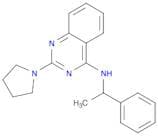
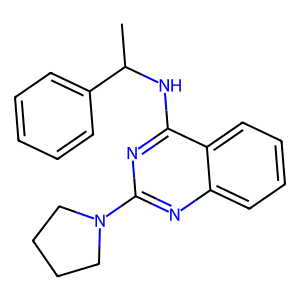
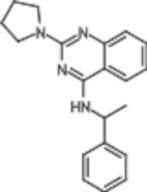
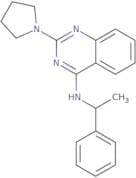
:4-Quinazolinamine, N-(1-phenylethyl)-2-(1-pyrrolidinyl)-
Description:
4-Quinazolinamine, N-(1-phenylethyl)-2-(1-pyrrolidinyl)- is a chemical compound characterized by its quinazolinamine core, which features a nitrogen-containing bicyclic structure. This compound includes a phenylethyl group and a pyrrolidinyl substituent, contributing to its potential biological activity. The presence of these functional groups suggests that it may exhibit properties relevant to medicinal chemistry, possibly acting as a ligand for various biological targets. The molecular structure indicates that it may possess both lipophilic and polar characteristics, which can influence its solubility and permeability in biological systems. Additionally, the compound's CAS number, 662163-81-7, allows for precise identification and retrieval of information in chemical databases. While specific data on its pharmacological effects may not be widely available, compounds of this nature are often investigated for their potential applications in drug development, particularly in areas such as neuropharmacology or oncology. Further studies would be necessary to elucidate its full range of properties and potential therapeutic uses.
Formula:C20H22N4
Sort by
Purity (%)
0
100
|
0
|
50
|
90
|
95
|
100
Found 4 products.
N-(1-phenylethyl)-2-(pyrrolidin-1-yl)quinazolin-4-aMine
CAS:Formula:C20H22N4Purity:98%Color and Shape:SolidMolecular weight:318.4155Importazole
CAS:Importazole is an inhibitor of the nuclear transport receptor importin-β.
Formula:C20H22N4Purity:99.6% - >99.99%Color and Shape:SolidMolecular weight:318.42Importazole
CAS:Importazole is a protein that inhibits the polymerase chain reaction (PCR) by binding to the DNA strand. It has been shown to inhibit cancer cell proliferation and induce apoptosis in HL-60 cells. Importazole also prevents the binding of taxane drugs to nuclear receptors, which may be beneficial for chemotherapy treatment. Importazole binds to DNA and blocks transcriptional regulation, which leads to neuronal death in rats. This protein has been shown to bind to both DNA and receptor activity, and also has an effect on cell nuclei.
Formula:C20H22N4Purity:Min. 95%Molecular weight:318.42 g/mol