CAS 6626-92-2
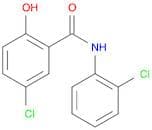
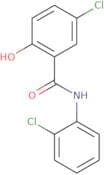
:5-chloro-N-(2-chlorophenyl)-2-hydroxybenzamide
Description:
5-Chloro-N-(2-chlorophenyl)-2-hydroxybenzamide, with the CAS number 6626-92-2, is an organic compound characterized by its aromatic structure and the presence of multiple functional groups. This compound features a benzamide backbone, which is modified by a hydroxyl group (-OH) and two chlorine substituents, one on the benzamide nitrogen and another on the aromatic ring. The presence of the hydroxyl group contributes to its potential solubility in polar solvents and may influence its reactivity and biological activity. The chlorinated phenyl group can enhance the compound's lipophilicity, affecting its interaction with biological membranes. This compound may exhibit various pharmacological properties, making it of interest in medicinal chemistry. Its structural characteristics suggest potential applications in drug development, particularly in targeting specific biological pathways. As with many chlorinated compounds, it is essential to consider environmental and health implications, including toxicity and persistence in biological systems. Overall, 5-chloro-N-(2-chlorophenyl)-2-hydroxybenzamide represents a complex molecule with diverse potential applications in research and industry.
Formula:C13H9Cl2NO2
InChI:InChI=1/C13H9Cl2NO2/c14-8-5-6-12(17)9(7-8)13(18)16-11-4-2-1-3-10(11)15/h1-7,17H,(H,16,18)
SMILES:c1ccc(c(c1)Cl)N=C(c1cc(ccc1O)Cl)O
Sort by
Purity (%)
0
100
|
0
|
50
|
90
|
95
|
100
Found 3 products.
5-Chloro-N-(2-chlorophenyl)-2-hydroxybenzamide
CAS:Formula:C13H9Cl2NO2Color and Shape:SolidMolecular weight:282.12215-CHLORO-N-(2-CHLOROPHENYL)-2-HYDROXYBENZAMIDE
CAS:Formula:C13H9Cl2NO2Purity:95.0%Color and Shape:Solid, PowderMolecular weight:282.125-Chloro-N-(2-Chlorophenyl)-2-Hydroxybenzamide
CAS:5-Chloro-N-(2-chlorophenyl)-2-hydroxybenzamide is a promyelocytic leukemia (PML) inhibitor that has been shown to have significant cytotoxicity against leukemia cells. 5-Chloro-N-(2-chlorophenyl)-2-hydroxybenzamide also inhibits the growth of prostate cancer cells and cervical cancer cells. It has been shown to inhibit the expression of oncogenes, such as sarcoma viral oncogene (SV40), and induce apoptosis in human cancer cells. This drug also shows significant cytotoxicity against human leukemia HL60 cells and erythroleukemia U937 cells.Formula:C13H9NO2Cl2Purity:Min. 95%Molecular weight:282.12 g/mol