CAS 66416-49-7
:2-methyl-6-phenylpyridine-3-carboxylic acid
Description:
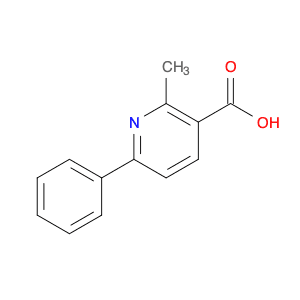
2-Methyl-6-phenylpyridine-3-carboxylic acid, with the CAS number 66416-49-7, is an organic compound characterized by its pyridine ring structure, which is a six-membered aromatic ring containing one nitrogen atom. This compound features a carboxylic acid functional group (-COOH) at the 3-position, contributing to its acidic properties. The presence of a methyl group at the 2-position and a phenyl group at the 6-position enhances its molecular complexity and may influence its reactivity and solubility. Typically, compounds of this nature exhibit moderate to high polarity due to the carboxylic acid group, which can engage in hydrogen bonding. The compound may be utilized in various chemical syntheses or as an intermediate in the production of pharmaceuticals and agrochemicals. Its specific physical properties, such as melting point, boiling point, and solubility, would depend on the molecular interactions and the presence of substituents. Overall, 2-methyl-6-phenylpyridine-3-carboxylic acid is of interest in organic chemistry for its structural features and potential applications.
Formula:C13H11NO2
InChI:InChI=1/C13H11NO2/c1-9-11(13(15)16)7-8-12(14-9)10-5-3-2-4-6-10/h2-8H,1H3,(H,15,16)
SMILES:Cc1c(ccc(c2ccccc2)n1)C(=O)O
Synonyms:- 2-Methyl-6-phenylnicotinic acid
- 3-Pyridinecarboxylic Acid, 2-Methyl-6-Phenyl-
Sort by
Purity (%)
0
100
|
0
|
50
|
90
|
95
|
100
Found 4 products.
2-Methyl-6-phenylnicotinic acid
CAS:Formula:C13H11NO2Purity:98%Color and Shape:SolidMolecular weight:213.23192-Methyl-6-phenylpyridine-3-carboxylic acid
CAS:2-Methyl-6-phenylpyridine-3-carboxylic acid is a compound that has been used as an antimicrobial agent. It is the most active of the aldehydes for the treatment of tuberculosis. 2-Methyl-6-phenylpyridine-3-carboxylic acid inhibits bacterial growth by binding to DNA dependent RNA polymerase, thereby preventing transcription and replication. The high frequency of human activity has been shown using a patch clamp technique on human erythrocytes. This active form is metabolized through a number of metabolic transformations, including hydrolysis by esterases or glucuronidases, oxidation by cytochrome P450 enzymes, reduction by glutathione reductase, or conjugation with glucuronic acid. 2 methyl 6 phenylpyridine 3 carboxylic acid also specifically binds to markers expressed at high levels in Mycobacterium tuberculosis strains (e.gFormula:C13H11NO2Purity:Min. 95%Molecular weight:213.23 g/mol