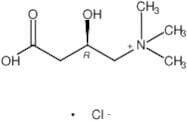
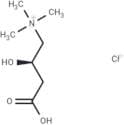
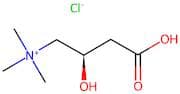
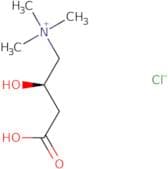
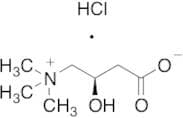
CAS 6645-46-1
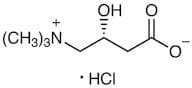
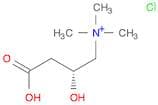
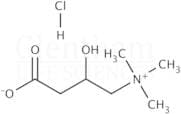
:(R)-(3-carboxy-2-hydroxypropyl)trimethylammonium chloride
Description:
(R)-(3-carboxy-2-hydroxypropyl)trimethylammonium chloride, with the CAS number 6645-46-1, is a quaternary ammonium compound characterized by its trimethylammonium group and a carboxylic acid functional group. This compound is typically a white crystalline solid or powder that is soluble in water, making it useful in various applications, including as a surfactant, emulsifier, or in biological systems. Its structure includes a positively charged nitrogen atom bonded to three methyl groups and a hydroxypropyl chain that contains both a carboxylic acid and a hydroxyl group, contributing to its amphiphilic nature. This amphiphilicity allows it to interact with both hydrophilic and hydrophobic substances, enhancing its utility in formulations. Additionally, the presence of the quaternary ammonium moiety imparts antimicrobial properties, making it relevant in pharmaceutical and cosmetic applications. Safety data should be consulted for handling and potential toxicity, as quaternary ammonium compounds can exhibit varying degrees of biological activity.
Formula:C7H16NO3·Cl
InChI:InChI=1S/C7H15NO3.ClH/c1-8(2,3)5-6(9)4-7(10)11;/h6,9H,4-5H2,1-3H3;1H/t6-;/m1./s1
InChI key:InChIKey=JXXCENBLGFBQJM-FYZOBXCZSA-N
SMILES:C([N+](C)(C)C)[C@@H](CC(O)=O)O.[Cl-]
Synonyms:- (2R)-
- (2R)-3-carboxy-2-hydroxy-N,N,N-trimethylpropan-1-aminium chloride
- (R)- 1-Propanaminium
- (R)-(-)-Carnitine hydrochloride
- (R)-(3-Carboxy-2-hydroxypropyl)trimethylammoniumchlorid
- (R)-3-Carboxy-2-Hydroxy-N,N,N-Trimethyl-1-
- (R)-3-Carboxy-2-hydroxy-N,N,N-trimethylpropan-1-aminiumchloride
- (R)-Carnitinehydrochloride
- 1-Butanaminium, 2,4-dihydroxy-N,N,N-trimethyl-4-oxo-, chloride (1:1), (2R)-
- 1-Propanaminium, 3-carboxy-2-hydroxy-N,N,N-trimethyl-
- 1-Propanaminium, 3-carboxy-2-hydroxy-N,N,N-trimethyl-, chloride, (2R)-
- 1-Propanaminium, 3-carboxy-2-hydroxy-N,N,N-trimethyl-, chloride, (R)-
- 3-Carboxy-2-Hydroxy-N,N,N-Trimethyl-,Chloride,(R)-1-Propanaminiu
- 3-carboxy-2-hydroxy-N,N,N-trimethyl-, chloride, (2R)-
- <span class="text-smallcaps">L</span>-(-)-Carnitine hydrochloride
- Ammonium, (3-carboxy-2-hydroxypropyl)trimethyl-, chloride, (-)-
- L-(-)-Carnitine hydrochloride
- L-(3-Carboxy-2-Hydroxypropyl)Trimethylammoniumchloride
- L-Carnitinechloride
- Lc-80
- Levocarnitine chloride
- Levocarnitinechloride
- Propanaminiumchloride
- chlorure de (R)-(3-carboxy-2-hydroxypropyl)trimethylammonium
- cloruro de (R)-(3-carboxi-2-hidroxipropil)trimetilamonio
- See more synonyms
Sort by
Purity (%)
0
100
|
0
|
50
|
90
|
95
|
100
Found 11 products.
L-Carnitine Hydrochloride
CAS:Formula:C7H15NO3·HClPurity:>98.0%(T)Color and Shape:White to Almost white powder to crystalMolecular weight:197.66L-Carnitine hydrochloride
CAS:Formula:C7H15NO3·HCIPurity:98.0 - 102.0 % (dried basis)Color and Shape:White powderMolecular weight:197.66L-Carnitine hydrochloride
CAS:L-Carnitine hydrochloride, a polar zwitterion, supports mitochondrial β-oxidation, fatty acid transport, antioxidant activity, and metabolic research.Formula:C7H16ClNO3Purity:99.749%Color and Shape:White To Slightly Beige Crystalline PowderMolecular weight:197.66L-Carnitine hydrochloride
CAS:L-Carnitine hydrochlorideFormula:C7H16NO3·ClPurity:99%Color and Shape: white solidMolecular weight:197.66g/molL-Carnitine hydrochloride
CAS:L-Carnitine hydrochloride is a naturally occurring amino acid that is involved in the metabolism of fat. L-Carnitine hydrochloride is a low-dose form of L-carnitine and has been shown to improve symptoms of diabetic neuropathy by increasing tissue levels of carnitine and reducing oxidative stress. This drug also has biological properties that include the ability to increase cellular energy production, and to improve the activity of primary cells in tissue culture. It also has proton buffering effects, which have been demonstrated using light microscopy on muscle cells from rats with papillary muscle. In addition, this drug has been shown to have antioxidant properties when tested on redox potential in rat liver mitochondria. L-Carnitine hydrochloride can be used as treatment for congestive heart failure, cardiac arrhythmias, and other metabolic disorders.Formula:C7H16NO3·ClPurity:Min. 95%Color and Shape:White PowderMolecular weight:197.66 g/mol(R)-3-Carboxy-2-hydroxy-N,N,N-trimethylpropan-1-aminium chloride
CAS:Formula:C7H16ClNO3Purity:98%Color and Shape:SolidMolecular weight:197.66(R)-3-Carboxy-2-hydroxy-N,N,N-trimethylpropan-1-aminium Chloride
CAS:Controlled ProductStability Hygroscopic
Applications (R)-3-Carboxy-2-hydroxy-N,N,N-trimethylpropan-1-aminium chloride is an important co-factor of mammalian mitochondrial energy metabolism. It is also a good active ingredient for dry-skin.
References Geier, David A., et al.: Neurochem. Res., 38(11), 2336-2341 (2013);Tanno, Osamu, et al.: Fragrance J., 33(8), 82-85 (2005);Formula:C7H16NO3·ClColor and Shape:White To Off-WhiteMolecular weight:197.66