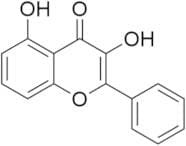
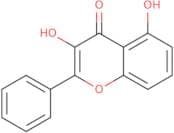
CAS 6665-69-6
:3,5-Dihydroxyflavone
Description:
3,5-Dihydroxyflavone is a flavonoid compound characterized by the presence of two hydroxyl (-OH) groups at the 3 and 5 positions of the flavone backbone. This structure contributes to its potential biological activities, including antioxidant, anti-inflammatory, and anticancer properties. The compound is typically found in various plants and is of interest in pharmacological research due to its ability to modulate various biochemical pathways. It exhibits solubility in organic solvents, while its solubility in water is limited, which is common for many flavonoids. The molecular formula of 3,5-dihydroxyflavone reflects its composition of carbon, hydrogen, and oxygen atoms, and its molecular weight is indicative of its size and complexity. In terms of applications, it may be explored in dietary supplements, cosmetics, and as a potential therapeutic agent. Overall, 3,5-dihydroxyflavone represents a significant compound within the flavonoid class, with ongoing research aimed at elucidating its full range of biological effects and potential uses.
Formula:C15H10O4
InChI:InChI=1S/C15H10O4/c16-10-7-4-8-11-12(10)13(17)14(18)15(19-11)9-5-2-1-3-6-9/h1-8,16,18H
InChI key:InChIKey=QHYWQIVTVQAKQF-UHFFFAOYSA-N
SMILES:O=C1C=2C(OC(=C1O)C3=CC=CC=C3)=CC=CC2O
Synonyms:- 3,5-Dihydroxy-2-phenyl-4H-1-benzopyran-4-one
- 3,5-Dihydroxyflavone
- 4H-1-benzopyran-4-one, 3,5-dihydroxy-2-phenyl-
- Flavone, 3,5-dihydroxy-
- 3,5-Dihydroxy-2-phenyl-4H-chromen-4-one
Sort by
Purity (%)
0
100
|
0
|
50
|
90
|
95
|
100
Found 2 products.
3,5-Dihydroxyflavone
CAS:Controlled ProductFormula:C15H10O4Color and Shape:NeatMolecular weight:254.2383,5-Dihydroxyflavone
CAS:3,5-Dihydroxyflavone is a flavonoid compound, which is a type of natural product commonly found in plants. This compound is derived from various plant sources, where it serves as a secondary metabolite involved in plant defense mechanisms. 3,5-Dihydroxyflavone exerts its effects through several mechanisms, including modulating oxidative stress and interacting with cellular signaling pathways. Its antioxidant properties allow it to scavenge free radicals, thereby protecting cells from oxidative damage. Additionally, it can influence various enzymes and receptors involved in cellular processes, leading to a range of biological effects.Formula:C15H10O4Purity:Min. 95%Color and Shape:Off-White PowderMolecular weight:254.24 g/mol