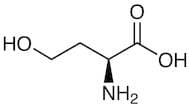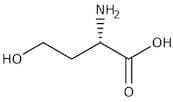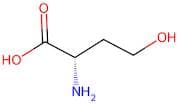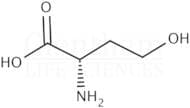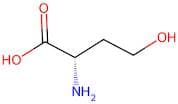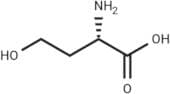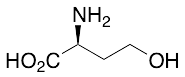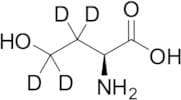
CAS 672-15-1
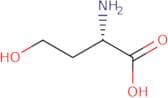
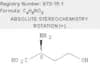
:L-Homoserine
Description:
L-Homoserine is an amino acid that plays a crucial role in various biological processes. It is classified as a non-essential amino acid, meaning that it can be synthesized by the body. L-Homoserine is characterized by its hydroxyl and amino functional groups, which contribute to its solubility in water. It is a colorless, crystalline solid at room temperature and has a slightly sweet taste. This compound is involved in the biosynthesis of other amino acids, such as threonine and methionine, and is also a precursor in the synthesis of certain vitamins. L-Homoserine is utilized in various applications, including as a nutritional supplement and in biochemical research. Its molecular formula is C4H9NO3, and it has a molecular weight that reflects its structure. Additionally, L-Homoserine can participate in various metabolic pathways, making it significant in both plant and animal physiology. Its stability and reactivity under different conditions are important for its role in biochemical processes.
Formula:C4H9NO3
InChI:InChI=1S/C4H9NO3/c5-3(1-2-6)4(7)8/h3,6H,1-2,5H2,(H,7,8)/t3-/m0/s1
InChI key:InChIKey=UKAUYVFTDYCKQA-VKHMYHEASA-N
SMILES:[C@H](CCO)(C(O)=O)N
Synonyms:- (2S)-2-Amino-4-hydroxybutanoic acid
- (S)-2-Amino-4-hydroxybutanoic acid
- (S)-Homoserine
- 2-Amino-4-hydroxybutanoic acid
- 2-Amino-4-hydroxybutyric acid
- <span class="text-smallcaps">L</span>-Homoserine
- Butanoic Acid, 2-Amino-4-Hydroxy-, L-
- Butanoic acid, 2-amino-4-hydroxy-, (S)-
- Butyric acid, 2-amino-4-hydroxy-
- Butyric acid, 2-amino-4-hydroxy-, <span class="text-smallcaps">L</span>-
- Butyric acid, 2-amino-4-hydroxy-, L-
- Homoserine
- L-Homoserin
- L-homoserina
- Nsc 206251
- L-Beta-Homo-Ser
- Homoserine (VAN)
- H-Homoserine
- L-Homoser
- L-Homoserine
- See more synonyms
Sort by
Purity (%)
0
100
|
0
|
50
|
90
|
95
|
100
Found 13 products.
L-Homoserine
CAS:Formula:C4H9NO3Purity:>98.0%(T)Color and Shape:White to Almost white powder to crystalMolecular weight:119.12L-Homoserine, 99%
CAS:L-Homoserine is used in the biosynthesis of methionine, threonine and isoleucine. This Thermo Scientific Chemicals brand product was originally part of the Alfa Aesar product portfolio. Some documentation and label information may refer to the legacy brand. The original Alfa Aesar product / item cod
Formula:C4H9NO3Purity:99%Color and Shape:White to pale cream, Crystals or powder or crystalline powderMolecular weight:119.12(2S)-2-Amino-4-hydroxybutanoic acid
CAS:Formula:C4H9NO3Purity:97%Color and Shape:SolidMolecular weight:119.1192Ref: IN-DA00IBOQ
1g22.00€5g26.00€10g28.00€1kgTo inquire25g52.00€5kgTo inquire100g121.00€500g562.00€100mg20.00€L-Homoserine
CAS:L-HomoserineFormula:C4H9NO3Purity:98%Color and Shape: pale yellow solidMolecular weight:119.12g/molL-Homoserine
CAS:Formula:C4H9NO3Purity:≥ 98.0%Color and Shape:White crystalline powderMolecular weight:119.12L-Homoserine
CAS:L-Homoserine is a reactive serine variant with an extra CH2, forms a 5-membered ring, not in proteins, and is made after cyanogen bromide cleavage.Formula:C4H9NO3Purity:99.77%Color and Shape:SolidMolecular weight:119.12L-Homoserine
CAS:Controlled ProductApplications L-Homoserine is used in the preparation nucleoside amino acids as histone methyltransferase inhibitors
References Schuele, Roland. et al., PCT Int. Appl. 133pp.(2021);Formula:C4H9NO3Color and Shape:Light Yellow CrystallineMolecular weight:119.12L-Homoserine
CAS:L-Homoserine is a cyclic dipeptide that inhibits the enzyme homoserine dehydrogenase and its conversion of L-homoserine to L-threonine. L-Homoserine is not an antimicrobial agent, but it has been shown to be a potent antagonist of the bacterial homoserine dehydrogenase. The inhibition of this enzyme prevents the conversion of L-homoserine to L-threonine and leads to a buildup of homoserine in bacteria. This accumulation can lead to bacterial cell death by inhibiting protein synthesis and DNA replication. The use of L-homoserine as an antimicrobial agent is being studied for wastewater treatment because it may be able to degrade hazardous compounds found in wastewater, such as antibiotics and other pharmaceuticals.Formula:C4H9NO3Purity:Min. 98.0 Area-%Color and Shape:White PowderMolecular weight:119.12 g/mol