CAS 67463-44-9
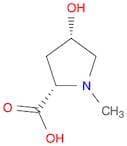
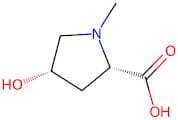
:N-Me-cis-Hyp-OH
Description:
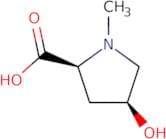
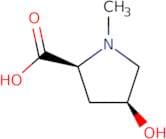
N-Me-cis-Hyp-OH, also known as N-Methyl-cis-4-hydroxyproline, is an amino acid derivative characterized by its structural features, which include a methyl group attached to the nitrogen atom and a hydroxyl group on the proline ring. This compound is a stereoisomer of hydroxyproline, specifically the cis form, which influences its biological activity and interactions. It is soluble in water and exhibits properties typical of amino acids, such as the ability to participate in hydrogen bonding due to the presence of the hydroxyl group. N-Me-cis-Hyp-OH is of interest in various fields, including biochemistry and pharmaceuticals, due to its potential role in protein synthesis and its implications in collagen stability and structure. Additionally, it may serve as a building block in peptide synthesis and has been studied for its effects on cellular processes. Its unique structural characteristics contribute to its functionality in biological systems, making it a subject of research in medicinal chemistry and related disciplines.
Formula:C6H11NO3
Synonyms:- N-Me-Cis-Hydroxyproline
Sort by
Purity (%)
0
100
|
0
|
50
|
90
|
95
|
100
Found 5 products.
(2S,4S)-4-Hydroxy-1-methylpyrrolidine-2-carboxylic acid
CAS:(2S,4S)-4-Hydroxy-1-methylpyrrolidine-2-carboxylic acidPurity:98%Molecular weight:145.16g/molN-Methyl-L-cis-4-hydroxyproline hydrochloride
CAS:N-Methyl-L-cis-4-hydroxyproline hydrochloride is a bioactive compound that has been isolated from the leaves of Semecarpifolia. It is an analysis product, which means that it can be used to identify or characterize a biological material. N-Methyl-L-cis-4-hydroxyproline hydrochloride is an essential component of hexane, ethanolic extracts, and leaves of Semecarpifolia. This compound has been shown to have antiinflammatory properties in research on rats. It also has fatty acid properties, as well as cyclic and butanamide structures. N-Methyl-L-cis-4-hydroxyproline hydrochloride belongs to the family Meliaceae, which includes plants like eucalyptus and camphor. This compound is soluble in solvents such as benzene, chloroform, ether, methanol, or petroleum ether.Formula:C6H11NO3•HClPurity:Min. 95%Molecular weight:181.62 g/mol(2S,4S)-4-Hydroxy-1-methylpyrrolidine-2-carboxylic acid
CAS:Formula:C6H11NO3Purity:95.0%Color and Shape:SolidMolecular weight:145.158N-Methyl-L-trans-4-hydroxyproline hydrochloride
CAS:N-Methyl-L-trans-4-hydroxyproline hydrochloride is a bioactive compound that is present in the leaves of Semecarpifolia. It has been found to have antioxidant and anti-inflammatory properties. The chemical structure of N-methyl-L-trans-4-hydroxyproline hydrochloride is cyclic, butanamide, hexane, ethanolic extracts, and semecarpifolia. The family Meliaceae includes species such as Eucalyptus, which produces the bioactive compound cineole. Solvents used in this process are hexane and ethanolic extracts.Formula:C6H11NO3·HClPurity:Min. 95%Color and Shape:PowderMolecular weight:181.62 g/mol