CAS 6753-98-6
:Humulene
Description:
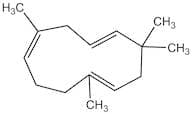
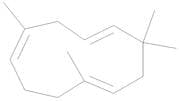
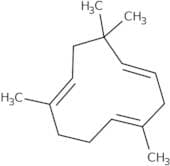
Humulene, also known as α-humulene, is a naturally occurring sesquiterpene found in various plants, particularly in hops (Humulus lupulus), which are used in beer production. It has a distinctive earthy, woody aroma and contributes to the flavor profile of certain beers. The chemical formula of humulene is C15H24, and it features a complex structure with multiple rings and double bonds, characteristic of terpenes. Humulene is known for its potential anti-inflammatory, analgesic, and antimicrobial properties, making it a subject of interest in both food science and medicinal research. It is also recognized for its role in the entourage effect, where it may enhance the therapeutic effects of other cannabinoids and terpenes. In terms of physical properties, humulene is typically a colorless to pale yellow liquid at room temperature, with a relatively low boiling point. Its solubility is primarily in organic solvents, and it is less soluble in water. Overall, humulene is an important compound in the fields of botany, food science, and pharmacology.
Formula:C15H24
InChI:InChI=1/C15H24/c1-13-7-5-8-14(2)10-12-15(3,4)11-6-9-13/h6-7,10-11H,5,8-9,12H2,1-4H3/b11-6+,13-7+,14-10-
InChI key:InChIKey=FAMPSKZZVDUYOS-HRGUGZIWSA-N
SMILES:CC/1(C)C/C=C(\C)/CC/C=C(\C)/C\C=C1
Synonyms:- (.+-.)-α-Humulene
- (1E,4E,8E)-2,6,6,9-Tetramethyl-1,4,8-cycloundecatriene
- (1E,4E,8E)-2,6,6,9-tetramethylcycloundeca-1,4,8-triene
- (1E,4E,8Z)-2,6,6,9-tetramethylcycloundeca-1,4,8-triene
- 1,4,8-Cycloundecatriene, 2,6,6,9-tetramethyl-, (1E,4E,8E)-
- 1,4,8-Cycloundecatriene, 2,6,6,9-tetramethyl-, (E,E,E)-
- Caryophyllene
- Humulen
- Humulene
- Humuleno
- alpha-Caryophyllene
- See more synonyms
Sort by
Purity (%)
0
100
|
0
|
50
|
90
|
95
|
100
Α-humulene
CAS:Alicyclic hydrocarbonFormula:C15H24Purity:≥ 90.0 % (GC)Color and Shape:Clear liquidMolecular weight:204.36Humulene
CAS:<p>Applications Humulene is a monocyclic sesquiterpene derived from farnesyl diphosphate and naturally found in clove, basil, hops, and cannabis sativa. Humulene has potential anti-inflammatory, anti-tumor, and anti-bacterial properties.<br>References Legault, J., et al.: Planta Med. 69, 402 (2003); Wei, M. C., et al.: Food Chem. 210, 172 (2016); Fernandes, E. S., et al.: Eur J Pharmacol. 569, 228 (2007)<br></p>Formula:C15H24Color and Shape:ColourlessMolecular weight:204.35α-Caryophyllene, 93%
CAS:<p>α-Caryophyllene, 93% is a naturally occurring sesquiterpene that serves as a multifunctional organic compound. It is primarily sourced from the essential oils of various plant species, including clove, rosemary, and hops. The compound is characterized by its distinctive bicyclic structure, which contributes to its diverse range of biological activities.</p>Formula:C15H24Purity:Min. 93 Area-%Color and Shape:Clear LiquidMolecular weight:204.35 g/mola-Caryophyllene, 96%
CAS:<p>a-Caryophyllene, 96% is a bioactive sesquiterpene, which is a compound commonly found in essential oils derived from various plants, notably those of the family Lamiaceae, such as cloves and rosemary. It is also prevalent in cannabis and medicinal herbs. The mode of action of a-Caryophyllene involves interaction with the endocannabinoid system, particularly as an agonist of the CB2 receptor, which is known to play a critical role in modulating inflammation and immune response. This interaction underlies its diverse pharmacological effects, which include anti-inflammatory, analgesic, and antibacterial properties.</p>Formula:C15H24Purity:Min. 93%Color and Shape:Clear LiquidMolecular weight:204.35 g/mol