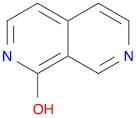
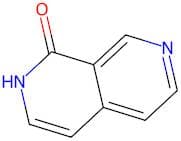
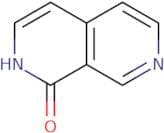
CAS 67988-50-5
:2,7-Naphthyridin-1(2H)-one
Description:
2,7-Naphthyridin-1(2H)-one, with the CAS number 67988-50-5, is a heterocyclic organic compound characterized by a fused bicyclic structure that includes a pyridine ring. This compound features a carbonyl group (C=O) at the 1-position, contributing to its classification as a ketone. The presence of nitrogen atoms in the ring structure imparts basicity and potential reactivity, making it of interest in various chemical applications, including medicinal chemistry and organic synthesis. It is typically a crystalline solid at room temperature and may exhibit solubility in polar organic solvents. The compound's unique structure allows for potential interactions with biological targets, which can be explored for pharmacological properties. Additionally, derivatives of naphthyridinones are often studied for their antimicrobial, anti-inflammatory, and anticancer activities. As with many organic compounds, handling should be done with care, considering safety data and potential hazards associated with its use.
Formula:C8H6N2O
InChI:InChI=1/C8H6N2O/c11-8-7-5-9-3-1-6(7)2-4-10-8/h1-5H,(H,10,11)
SMILES:c1cncc2c1ccnc2O
Synonyms:- 1,2-Dihydro-2,7-Naphthyridin-1-One
Sort by
Purity (%)
0
100
|
0
|
50
|
90
|
95
|
100
Found 4 products.
Ref: IN-DA00FBYG
1g99.00€5g257.00€10g579.00€25gTo inquire100gTo inquire100mg40.00€250mg46.00€500mg63.00€2,7-Naphthyridin-1(2H)-one
CAS:<p>Cabozantinib is a small molecule that is the first to target VEGFR-2, which is a receptor tyrosine kinase involved in the development of fibrosis. Cabozantinib inhibits the activity of VEGFR-2 by binding to its ATP-binding site and blocking the phosphorylation of downstream signaling pathways. Cabozantinib has been shown to have antifibrotic properties in both preclinical and clinical models. The drug candidate has been shown to reduce kidney fibrosis in animal models. The standard dose for cabozantinib was found to be 5 mg/kg, with a maximum tolerated dose of 20 mg/kg. In vitro studies have indicated that cabozantinib binds with high affinity to the ATP-binding pocket of VEGFR-2, exhibiting competitive inhibition against other kinases such as PDGFR-beta and cKit, as well as diaryliodonium (a specific inhibitor). Caboz</p>Formula:C8H6N2OPurity:Min. 95%Molecular weight:146.14 g/mol