


CAS 68128-94-9
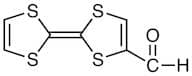
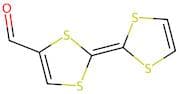
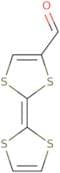
:2-(1,3-dithiol-2-ylidene)-1,3-dithiole-4-carbaldehyde
Description:
2-(1,3-Dithiol-2-ylidene)-1,3-dithiole-4-carbaldehyde is a heterocyclic organic compound characterized by its unique structure, which includes multiple sulfur atoms and a carbonyl group. This compound features a dithiolene framework, which contributes to its potential applications in materials science and organic electronics due to its ability to form charge-transfer complexes. The presence of the aldehyde functional group enhances its reactivity, making it suitable for further chemical modifications. Typically, compounds of this nature exhibit interesting electronic properties, including conductivity and photochemical behavior, which can be exploited in various applications such as organic photovoltaics and sensors. Additionally, the sulfur atoms in the structure can impart stability and influence the compound's solubility in different solvents. Overall, 2-(1,3-dithiol-2-ylidene)-1,3-dithiole-4-carbaldehyde is notable for its distinctive chemical properties and potential utility in advanced materials and organic synthesis.
Formula:C7H4OS4
InChI:InChI=1/C7H4OS4/c8-3-5-4-11-7(12-5)6-9-1-2-10-6/h1-4H
SMILES:C1=CSC(=C2SC=C(C=O)S2)S1
Synonyms:- 4-Formyltetrathiafulvalene
Sort by
Purity (%)
0
100
|
0
|
50
|
90
|
95
|
100
Found 5 products.
Formyltetrathiafulvalene
CAS:Formula:C7H4OS4Purity:>98.0%(GC)Color and Shape:Dark green to Dark red to Black powder to crystalMolecular weight:232.352-(1,3-Dithiol-2-ylidene)-1,3-dithiole-4-carboxaldehyde
CAS:Formula:C7H4OS4Purity:98%Color and Shape:SolidMolecular weight:232.3661Formyltetrathiafulvalene
CAS:Formyltetrathiafulvalene is an amide that contains a radical form. It is synthesized by the coordination of a copper complex with l-tartaric acid and imine. The optical properties of this molecule are sensitive to changes in its environment, such as pH and light intensity. Formyltetrathiafulvalene has been shown to absorb light and emit it again at a longer wavelength, which is the basis for its use in organic light-emitting diodes (OLEDs). Functional groups on the molecule can be used for hydrogen tartrate detection, electrochemical studies, or significant interactions with other molecules.Formula:C7H4OS4Purity:Min. 98%Color and Shape:PowderMolecular weight:232.35 g/mol





![[2,2′-Bi(1,3-dithiolylidene)]-4-carbaldehyde](/_next/image/?url=https%3A%2Fstatic.cymitquimica.com%2Fproducts%2F10%2Fthumb%2FF759975.jpg&w=3840&q=75)
