![[2-(2-{4-[(4-Chlorophenyl)(phenyl)methyl]-1-piperazinyl}ethoxy)et hoxy]acetic acid](/_next/image/?url=https%3A%2Fstatic.cymitquimica.com%2Fcas-image%2Fthumb-webp%2F313866-2-2-4-4-chlorophenyl-phenyl-methyl-1-piperazinyl-ethoxy-et-hoxy-acetic-acid.webp&w=3840&q=75)
CAS 682323-77-9
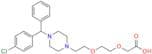
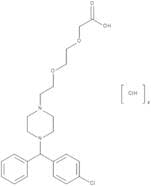
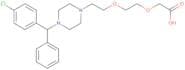
:[2-(2-{4-[(4-Chlorophenyl)(phenyl)methyl]-1-piperazinyl}ethoxy)et hoxy]acetic acid
Description:
The chemical substance known as [2-(2-{4-[(4-Chlorophenyl)(phenyl)methyl]-1-piperazinyl}ethoxy)ethoxy]acetic acid, with the CAS number 682323-77-9, is a synthetic organic compound characterized by its complex structure, which includes a piperazine ring, ether linkages, and an acetic acid functional group. This compound typically exhibits properties such as solubility in polar solvents due to the presence of ether and carboxylic acid functionalities, while its aromatic groups may contribute to hydrophobic interactions. The presence of the chlorophenyl moiety suggests potential biological activity, possibly influencing its pharmacological properties. Such compounds are often investigated for their potential therapeutic applications, particularly in the fields of psychiatry and neurology, due to the piperazine component, which is commonly found in various psychoactive drugs. Additionally, the structural complexity may lead to interesting interactions with biological targets, making it a subject of interest in medicinal chemistry research.
Formula:C23H29ClN2O4
Sort by
Purity (%)
0
100
|
0
|
50
|
90
|
95
|
100
Found 5 products.
Cetirizine EP Impurity E
CAS:Formula:C23H29ClN2O4Color and Shape:White To Off-White SolidMolecular weight:432.95Hydroxyzine Acetic Acid Hydrochloride Salt
CAS:Controlled ProductFormula:C23H29ClN2O4·xHClColor and Shape:White To BeigeMolecular weight:469.4Hydroxyzine acetic acid
CAS:Controlled ProductHydroxyzine acetic acid is an inhibitor of human kinases, which are proteins involved in cell signaling pathways. It is an analog of tolvaptan, a drug used to treat tumors and cancer cells. Hydroxyzine acetic acid has been shown to induce apoptosis, or programmed cell death, in various types of cancer cells. This compound may have potential as an anticancer agent due to its ability to inhibit the activity of Chinese hamster ovary (CHO) kinases. Additionally, it has been found in urine samples from patients with cancer, suggesting that it may be a useful biomarker for cancer diagnosis and treatment monitoring.Formula:C23H29ClN2O4Purity:90%MinMolecular weight:432.9 g/mol