CAS 68295-48-7
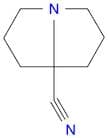
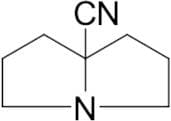
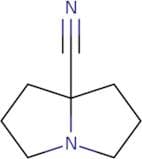
:1H-Pyrrolizine-7a(5H)-carbonitrile, tetrahydro-
Description:
1H-Pyrrolizine-7a(5H)-carbonitrile, tetrahydro- is a chemical compound characterized by its unique bicyclic structure, which includes a pyrrolizine ring system. This compound features a carbonitrile functional group, contributing to its reactivity and potential applications in organic synthesis. The tetrahydro designation indicates that the compound is fully saturated, meaning it contains no double bonds within its ring structure. This saturation can influence its physical properties, such as solubility and boiling point. The presence of the carbonitrile group also suggests potential for nucleophilic reactions, making it a candidate for various chemical transformations. Additionally, compounds like this may exhibit biological activity, which can be of interest in medicinal chemistry. Its CAS number, 68295-48-7, allows for easy identification and retrieval of information regarding its properties, safety data, and potential applications in research and industry. Overall, 1H-Pyrrolizine-7a(5H)-carbonitrile, tetrahydro- is a versatile compound with implications in both synthetic and medicinal chemistry.
Formula:C8H12N2
Sort by
Purity (%)
0
100
|
0
|
50
|
90
|
95
|
100
Found 4 products.
Hexahydro-1H-pyrrolizine-7a-carbonitrile
CAS:Formula:C8H12N2Purity:95%Color and Shape:LiquidMolecular weight:136.1943Tetrahydro-1H-pyrrolizine-7a(5H) Carbonitrile
CAS:Controlled ProductFormula:C8H12N2Color and Shape:NeatMolecular weight:136.194Hexahydro-1H-pyrrolizine-7a-carbonitrile
CAS:Hexahydro-1H-pyrrolizine-7a-carbonitrile is an experimental drug that belongs to the class of medicines. It has a six-membered ring and is stable, with a molecular weight of 204. Hexahydro-1H-pyrrolizine-7a-carbonitrile has been shown to have antihistamine or anticholinergic properties, which may be due to its ability to inhibit the release of histamine from mast cells or block acetylcholine receptors in nerve endings. The mechanism for this action is unknown, but it may be related to the equilibrium between two diastereomers: one with an electron withdrawing group on nitrogen and another with electron donating groups on nitrogen. This equilibrium can be controlled by changes in temperature or pH levels.Formula:C8H12N2Purity:Min. 95%Molecular weight:136.19 g/mol