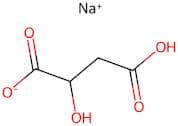
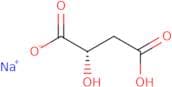
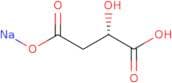
CAS 68303-40-2
:L-malic acid monosodium crystalline
Description:
L-malic acid monosodium crystalline, with the CAS number 68303-40-2, is a sodium salt of L-malic acid, an organic compound that plays a significant role in various biochemical processes, particularly in the Krebs cycle. This substance typically appears as a white crystalline powder and is soluble in water, making it useful in various applications, including food and beverage industries as an acidulant and flavor enhancer. It possesses a slightly acidic taste and is known for its ability to enhance the tartness of products. In addition to its culinary uses, L-malic acid monosodium can also serve as a buffering agent and is utilized in pharmaceuticals and cosmetics for its stabilizing properties. The compound is generally recognized as safe (GRAS) when used in appropriate amounts, but like all substances, it should be handled with care to avoid any potential adverse effects. Its chemical structure includes both carboxylic acid and hydroxyl functional groups, contributing to its reactivity and interaction with other compounds.
Formula:C4H5NaO5
Synonyms:- L-Malic acid monosodium salt
- L-Hydroxybutanedioic acid sodium salt
- SODIUM BIMALATE
- SODIUM ACID MALATE
- Malic acid-Na-salt
- L-(-)-Malic acid sodiuM salt 95-100% (enzyMatic)
- L-malic acid monosodium crystalline
- SODIUM HYDROGEN MALATE
- DL-MALIC ACID MONOSODIUM SALT
- SODIUM HYDROGEN DL-MALATE
Sort by
Purity (%)
0
100
|
0
|
50
|
90
|
95
|
100
Found 4 products.
Sodium 3-carboxy-2-hydroxypropanoate
CAS:Sodium 3-carboxy-2-hydroxypropanoatePurity:95%Molecular weight:156.07g/molL-(-)-Malic acid monosodium
CAS:L-Malic acid is a dicarboxylic acid that is found in many fruits and vegetables. It is the substrate for the enzyme malate dehydrogenase, which catalyzes the oxidation of L-malate to oxaloacetate. L-Malic acid is used to study mitochondrial function, as it can be used as an alternative energy source. The L-malic acid monosodium salt (LAM) has been shown to be effective in preventing muscle damage caused by exercise. This may be due to its ability to decrease oxidative stress and increase ATP production through increased mitochondrial activity. LAM also has been shown to promote photoreceptor cell survival and improve retinal function in animals with damaged photoreceptors, although it does not have any effect on normal animal eyes.Formula:C4H6O5•NaPurity:Min. 95%Color and Shape:PowderMolecular weight:157.08 g/molL-Malic acid, sodium salt
CAS:L-Malic acid, sodium salt is a white crystalline compound that is soluble in water and has a molecular weight of 136.08. It is a useful scaffold for the synthesis of organic compounds and can be used as a reaction component or as a speciality chemical. L-Malic acid, sodium salt can be used to synthesize many different types of compounds including pharmaceuticals, hormones, industrial chemicals, and research chemicals. This compound is also an important intermediate in the production of amino acids, polymers, and other organic compounds. L-Malic acid, sodium salt has been found to have high purity with few impurities.
Formula:C4H5NaO5Molecular weight:156.07 g/mol