CAS 685-87-0
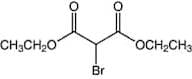
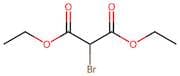
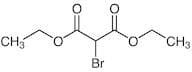
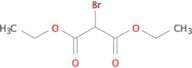
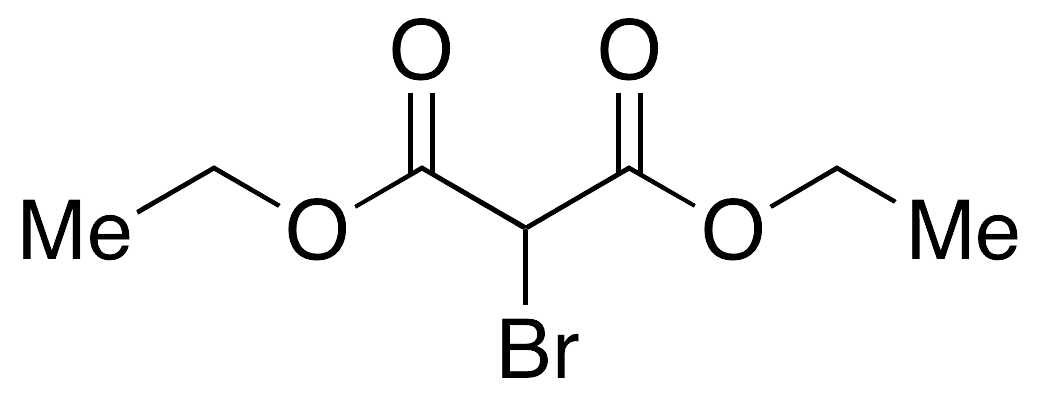
:Diethyl bromomalonate
- 1,3-Diethyl 2-bromopropanedioate
- 2-Bromomalonic acid diethyl ester
- 2-Diethyl bromomalonate
- Bromomalonic acid diethyl ester
- Diethyl 2-bromo-1,3-propanedioate
- Diethyl 2-bromomalonate
- Diethyl 2-bromopropanedioate
- Diethyl Bromopropanedioate
- Diethyl α-bromomalonate
- Ethyl bromomalonate
- Malonic acid, bromo-, diethyl ester
- NSC 1985
- Propanedioic acid, 2-bromo-, 1,3-diethyl ester
- Propanedioic acid, bromo-, diethyl ester
- α-Bromomalonic ester
- See more synonyms
Diethyl bromomalonate, 90+%
CAS:Diethyl bromomalonate is used in perfumes. It is also used to synthesize other compounds such as barbiturates, artificial flavorings, vitamin B1, and vitamin B6. This Thermo Scientific Chemicals brand product was originally part of the Alfa Aesar product portfolio. Some documentation and label inforFormula:C7H11BrO4Purity:90+%Molecular weight:239.07Diethyl 2-bromomalonate
CAS:Diethyl 2-bromomalonateFormula:C7H11BrO4Purity:98%Color and Shape: colourless to light yellow liquidMolecular weight:239.06384g/molDiethyl Bromomalonate
CAS:Formula:C7H11BrO4Purity:>85.0%(GC)Color and Shape:Colorless to Light yellow clear liquidMolecular weight:239.07Diethyl bromomalonate
CAS:BR1275 - Diethyl bromomalonate
Formula:C7H11BrO4Purity:95%Color and Shape:Clear LiquidMolecular weight:239.065Diethyl Bromomalonate
CAS:Controlled ProductApplications Diethyl Bromomalonate is a chemical constituent of the asymmetric cyclopropanation of chalcones. Also used in the preparation of nanaplatforms for NIR imaging-guided photodynamic therapy of cancer cells.
References Herchl, R. et al.: Tetra. Lett., 54, 2472 (2013); Liu, X. et al.: Chem. Comm., 49, 3224 (2013);Formula:C7H11BrO4Color and Shape:NeatMolecular weight:239.06Diethyl bromomalonate
CAS:Diethyl bromomalonate is a chemical compound with the formula CHBrOOCCH=COOCH. It is a kinetic data that has been used as a preparative hplc. Coumarin derivatives have been synthesized by its use. This reaction is an example of nucleophilic substitution of diethyl bromomalonate with an alkyl halide and hydrochloric acid in methyl ketones, which are hepg2 cell substrates. The mechanism for this reaction involves formation of an enolate from the carboxylic acid moiety followed by attack of the nucleophile on the electrophilic bromine atom to form the substituted product.
Formula:C7H11BrO4Purity:Min. 95%Color and Shape:Clear LiquidMolecular weight:239.06 g/mol