CAS 6863-76-9
:Pyrazine, 2-chloro-, 4-oxide
Description:
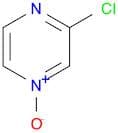
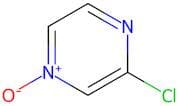
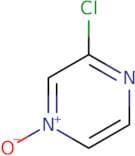
Pyrazine, 2-chloro-, 4-oxide, also known by its CAS number 6863-76-9, is a heterocyclic organic compound characterized by a pyrazine ring with a chlorine substituent and an oxide functional group. This compound typically exhibits a pale yellow to brownish appearance and is soluble in polar organic solvents. Its molecular structure includes a six-membered aromatic ring containing two nitrogen atoms, which contributes to its reactivity and potential applications in various chemical reactions. The presence of the chlorine atom enhances its electrophilic properties, making it useful in synthetic organic chemistry. Pyrazine derivatives are often studied for their biological activities, including antimicrobial and antifungal properties. Additionally, the compound may serve as an intermediate in the synthesis of more complex molecules in pharmaceuticals and agrochemicals. Safety data indicates that, like many chlorinated compounds, it should be handled with care due to potential toxicity and environmental concerns. Overall, pyrazine, 2-chloro-, 4-oxide is a valuable compound in both research and industrial applications.
Formula:C4H3ClN2O
InChI:InChI=1S/C4H3ClN2O/c5-4-3-7(8)2-1-6-4/h1-3H
InChI key:InChIKey=ICTJTHXSPXEBFR-UHFFFAOYSA-N
SMILES:ClC=1C=N(=O)C=CN1
Synonyms:- 2-Chloropyrazine 4-oxide
- 3-Chloro-1-oxidopyrazin-1-ium
- 3-Chloropyrazine N-oxide
- NSC 381064
- Pyrazine, 2-chloro-, 4-oxide
- Pyrazine, 3-Chloro-, 1-Oxide
- Pyrazine, chloro-, 4-oxide
- 3-Chloropyrazine 1-oxide
Sort by
Purity (%)
0
100
|
0
|
50
|
90
|
95
|
100
Found 3 products.
Pyrazine, 2-chloro-,4-oxide
CAS:Formula:C4H3ClN2OPurity:%Color and Shape:SolidMolecular weight:130.53243-Chloropyrazine 1-oxide
CAS:3-Chloropyrazine 1-oxide is a colorless solid that is soluble in chloroform, acetonitrile, and ethyl acetate. It has a molecular weight of 171.44 and a melting point of -8°C. 3-Chloropyrazine 1-oxide is used as an intermediate in the preparation of quinoxalines using the cross-coupling reaction with palladium complexes. This product can be used to synthesize unsymmetrical compounds that contain nitrogen atoms by reacting with pyridine ring, which will result in a frequency shift. The chloride ion in this compound is minuscule and does not participate in any reactions. 3-Chloropyrazine 1-oxide reacts with phosphine to form chlorobenzene, which is then oxidized to form n-oxide.
Formula:C4H3ClN2OPurity:Min. 95%Molecular weight:130.53 g/mol