CAS 68631-52-7
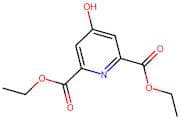
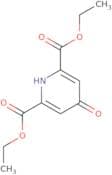
:2,6-Pyridinedicarboxylic acid, 4-hydroxy-, diethyl ester
Description:
2,6-Pyridinedicarboxylic acid, 4-hydroxy-, diethyl ester, also known by its CAS number 68631-52-7, is an organic compound characterized by its pyridine ring structure substituted with two carboxylic acid groups and a hydroxy group, along with two ethyl ester groups. This compound typically appears as a colorless to pale yellow liquid or solid, depending on its purity and form. It is soluble in organic solvents such as ethanol and acetone but has limited solubility in water due to its hydrophobic ethyl ester groups. The presence of the hydroxy group contributes to its potential reactivity, allowing for hydrogen bonding and participation in various chemical reactions. This compound may be utilized in organic synthesis, particularly in the development of pharmaceuticals or agrochemicals, owing to its functional groups that can undergo further transformations. Safety data should be consulted for handling, as with many organic compounds, it may pose health risks if ingested or inhaled.
Formula:C11H13NO5
Sort by
Purity (%)
0
100
|
0
|
50
|
90
|
95
|
100
Found 4 products.
Diethyl 4-hydroxypyridine-2,6-dicarboxylate
CAS:Formula:C11H13NO5Purity:95%Color and Shape:SolidMolecular weight:239.2246Diethyl 4-hydroxypyridine-2,6-dicarboxylate
CAS:Diethyl 4-hydroxypyridine-2,6-dicarboxylatePurity:95%Molecular weight:239.22g/mol4-Hydroxy-pyridine-2,6-dicarboxylic acid diethyl ester
CAS:4-Hydroxy-pyridine-2,6-dicarboxylic acid diethyl ester is a multifunctional compound that can be used as an intermediate for the synthesis of a wide variety of organic compounds. It has been shown to be able to hydrolyze under acidic conditions to give ethoxycarbonyl groups, which are useful in organic chemistry. This compound also shows reactivity with dendrimers and other polymers, which can be used in various techniques. 4-Hydroxy-pyridine-2,6-dicarboxylic acid diethyl ester is also trifunctional and can be used as a coupling agent in reactions involving three different reagents. The multifunctionality of this compound makes it useful for many different applications.Formula:C11H13NO5Purity:Min. 95%Molecular weight:239.22 g/mol