CAS 68707-69-7
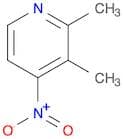
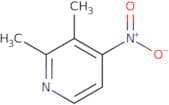
:2,3-dimethyl-4-nitropyridine
Description:
2,3-Dimethyl-4-nitropyridine is a heterocyclic organic compound characterized by a pyridine ring substituted with two methyl groups at the 2 and 3 positions and a nitro group at the 4 position. This compound typically appears as a yellow to orange crystalline solid and is known for its aromatic properties, which contribute to its stability and reactivity. The presence of the nitro group introduces significant electron-withdrawing characteristics, influencing the compound's reactivity in electrophilic aromatic substitution reactions. It is soluble in organic solvents, such as ethanol and acetone, but has limited solubility in water due to its non-polar methyl groups. 2,3-Dimethyl-4-nitropyridine is utilized in various chemical syntheses and may serve as an intermediate in the production of pharmaceuticals or agrochemicals. Safety precautions should be observed when handling this compound, as nitro-substituted compounds can be hazardous and may pose environmental risks.
Formula:C7H8N2O2
InChI:InChI=1/C7H8N2O2/c1-5-6(2)8-4-3-7(5)9(10)11/h3-4H,1-2H3
SMILES:Cc1c(C)nccc1N(=O)=O
Synonyms:- 2,3-Dimethyl-4-nitropyridin
- Pyridine, 2,3-Dimethyl-4-Nitro-
Sort by
Purity (%)
0
100
|
0
|
50
|
90
|
95
|
100
Found 3 products.
2,3-Dimethyl-4-nitropyridine
CAS:Formula:C7H8N2O2Purity:95.0%Color and Shape:Liquid, No data available.Molecular weight:152.1532,3-Dimethyl-4-nitropyridine
CAS:2,3-Dimethyl-4-nitropyridine is a nucleophilic compound that reacts with amines to form the corresponding nitrosoamines. It has been shown that the reaction yield depends on the concentration of thiosemicarbazide and the pH of the solution. 2,3-Dimethyl-4-nitropyridine has been used as a model system to study coordination chemistry and its effect on mutation frequency in mice. The n-oxide derivative of this molecule is an environmental pollutant found in soil samples in Europe and China. This molecule has been shown to cause mutations in cancer cells and can be used for research into cancer treatment.Formula:C7H8N2O2Purity:Min. 95%Molecular weight:152.15 g/mol