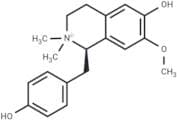
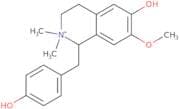
CAS 6871-67-6
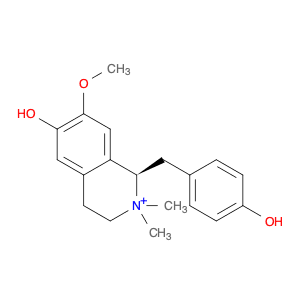
:(-)-Lotusine
Description:
(-)-Lotusine, with the CAS number 6871-67-6, is a naturally occurring alkaloid primarily derived from various plant species, particularly those in the legume family. It is characterized by its chiral nature, existing as a single enantiomer, which contributes to its biological activity. The compound typically exhibits a complex structure featuring a bicyclic framework, which is common among many alkaloids. (-)-Lotusine has been studied for its potential pharmacological properties, including its effects on the central nervous system and its role in modulating neurotransmitter activity. Additionally, it may possess antioxidant properties, making it of interest in the field of medicinal chemistry. The substance is often analyzed using techniques such as NMR spectroscopy and mass spectrometry to determine its purity and structural integrity. As with many alkaloids, (-)-Lotusine's safety profile and therapeutic potential require further investigation to fully understand its effects and applications in medicine.
Formula:C19H24NO3
InChI:InChI=1S/C19H23NO3/c1-20(2)9-8-14-11-18(22)19(23-3)12-16(14)17(20)10-13-4-6-15(21)7-5-13/h4-7,11-12,17H,8-10H2,1-3H3,(H-,21,22)/p+1/t17-/m1/s1
InChI key:InChIKey=ZKTMLINFIQCERN-QGZVFWFLSA-O
SMILES:C([C@@H]1C=2C(=CC(O)=C(OC)C2)CC[N+]1(C)C)C3=CC=C(O)C=C3
Synonyms:- Lotusine
- (1R)-1,2,3,4-Tetrahydro-6-hydroxy-1-[(4-hydroxyphenyl)methyl]-7-methoxy-2,2-dimethylisoquinolinium
- Isoquinolinium, 1,2,3,4-tetrahydro-6-hydroxy-1-[(4-hydroxyphenyl)methyl]-7-methoxy-2,2-dimethyl-, (R)-
- D-(-)-Lotusine
- Isoquinolinium, 1,2,3,4-tetrahydro-6-hydroxy-1-[(4-hydroxyphenyl)methyl]-7-methoxy-2,2-dimethyl-, (1R)-
- inhibit,Lotusine,Inhibitor
Sort by
Purity (%)
0
100
|
0
|
50
|
90
|
95
|
100
Found 6 products.
Lotusine
CAS:Lotusine, a pure alkaloid from Nelumbo nucifera, affects myocardial action potentials and Purkinje fiber currents.Formula:C19H24NO3Purity:99.53% - 99.83%Color and Shape:SolidMolecular weight:314.4Ref: TM-T8195
1mg63.00€5mg130.00€1mL*10mM (DMSO)140.00€10mg178.00€25mg304.00€50mg445.00€100mg662.00€500mg1,378.00€Lotusine
CAS:Lotusine is an alkaloid compound, which is a naturally occurring chemical sourced from the lotus plant, specifically Nelumbo nucifera. The mode of action of lotusine involves interacting with various biochemical pathways, including modulation of neurotransmitter receptors, which might contribute to its bioactivity. This compound has been the subject of research due to its potential therapeutic properties, showing promise in fields such as neuropharmacology and cancer research. Studies suggest that lotusine can exhibit antioxidant, anti-inflammatory, and neuroprotective effects. Furthermore, its potential antitumor activity has attracted interest for cancer treatment strategies. Continuous research is necessary to fully elucidate the mechanisms of action and to explore therapeutic applications in clinical settings.Formula:C19H24NO3Purity:Min. 95%Molecular weight:314.4 g/mol