CAS 6873-09-2
:Epiberberine
Description:
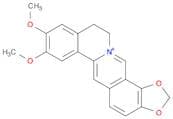
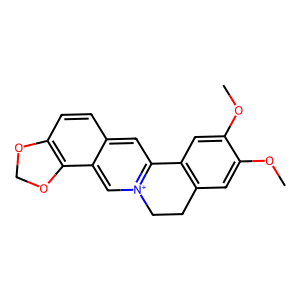
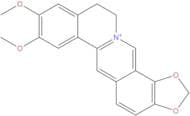
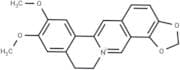
Epiberberine is a natural alkaloid derived from various plants, particularly those in the Berberidaceae family, such as goldenseal and barberry. It is characterized by its complex tetracyclic structure, which includes a protoberberine skeleton. This compound exhibits a range of biological activities, including antimicrobial, anti-inflammatory, and potential anticancer properties. Epiberberine is known for its ability to interact with various biological targets, influencing cellular signaling pathways. It is often studied for its pharmacological effects, particularly in traditional medicine contexts. The compound is typically found in a crystalline form and is soluble in organic solvents but has limited solubility in water. Its pharmacokinetics and bioavailability are subjects of ongoing research, as they play a crucial role in its therapeutic potential. Overall, epiberberine represents a significant interest in both natural product chemistry and medicinal research due to its diverse biological effects and potential health benefits.
Formula:C20H18NO4
InChI:InChI=1/C20H18NO4/c1-22-18-8-13-5-6-21-10-15-12(3-4-17-20(15)25-11-24-17)7-16(21)14(13)9-19(18)23-2/h3-4,7-10H,5-6,11H2,1-2H3/q+1
InChI key:InChIKey=FPJQGFLUORYYPE-UHFFFAOYSA-N
SMILES:COc1cc2CCN3C=c4c(=CC3c2cc1OC)ccc1c4OCO1
Synonyms:- 11,12-Dihydro-8,9-dimethoxybenzo[a]-1,3-benzodioxolo[4,5-g]quinolizinium
- 8,9-Dimethoxy-11,12-Dihydro[1,3]Dioxolo[4,5-H]Isoquino[2,1-B]Isoquinolin-13-Ium
- Benz(a)-1,3-benzodioxolo(4,5-g)quinolizinium, 11,12-dihydro-8,9-dimethoxy-
- Benzo[a]-1,3-benzodioxolo[4,5-g]quinolizinium, 11,12-dihydro-8,9-dimethoxy-
- Berbinium, 7,8,13,13a-tetradehydro-2,3-dimethoxy-9,10-(methylenedioxy)-
- Dehydrosinactine
Sort by
Purity (%)
0
100
|
0
|
50
|
90
|
95
|
100
Found 6 products.
Epiberberine
CAS:1.Formula:C20H18NO4Purity:98.52% - 99.59%Color and Shape:SolidMolecular weight:336.36Epiberberine
CAS:Epiberberine is an alkaloid compound, which is a naturally occurring substance found in certain plants of the Berberidaceae family. It is derived specifically from some species of the Berberis genus. The molecular structure of epiberberine is similar to berberine, with slight variations that influence its biological activity.
Formula:C20H18NO4Purity:Min. 95%Molecular weight:336.36 g/molRef: 3D-GAA87309
Discontinued product