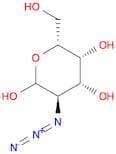
CAS 68733-26-6
:D-Galactose,2-azido-2-deoxy-
Description:
D-Galactose, 2-azido-2-deoxy- is a modified sugar derivative of galactose, characterized by the presence of an azido group (-N3) at the 2-position of the sugar ring. This compound is typically a white to off-white solid and is soluble in water, owing to the hydroxyl groups present in its structure. The azido group introduces unique reactivity, making it useful in various chemical applications, particularly in bioconjugation and click chemistry, where it can participate in reactions to form stable linkages with other molecules. D-Galactose itself is a naturally occurring monosaccharide, and the modification to form 2-azido-2-deoxy- alters its biological properties and reactivity. This compound may be utilized in research settings, particularly in the synthesis of glycosylated compounds or in the study of carbohydrate interactions. As with many azido compounds, care should be taken during handling due to potential hazards associated with the azido functional group, which can be explosive under certain conditions.
Formula:C6H11N3O5
Sort by
Purity (%)
0
100
|
0
|
50
|
90
|
95
|
100
Found 4 products.
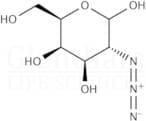
2-Azido-2-deoxy-D-galactose
CAS:Formula:C6H11N3O5Color and Shape:White crystalline solidMolecular weight:205.172-Azido-2-deoxy-D-galactose
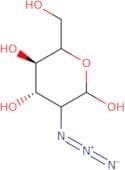
CAS:2-Azido-2-deoxy-D-galactose is a disaccharide that is synthesized by the enzymatic addition of galactose to 2-azido-2-deoxyglucose. It has been shown to be antigenic in the test tube and is reactive with hydroxy groups. 2-Azido-2-deoxygalactose can be glycosylated by glycopeptides, which are glycoproteins containing one or more oligosaccharide chains covalently linked to a protein core. The hydrophilic nature of this sugar makes it an ideal candidate for conjugation with hydrophobic drugs such as antibiotics. This disaccharide was used in the synthesis of glycoconjugates, which are carbohydrate molecules attached to proteins or lipids, and can be found in bacteria such as Corynebacterium glutamicum. 2-Azido-2-deoxygalactoseFormula:C6H11N3O5Purity:Min. 98 Area-%Color and Shape:White PowderMolecular weight:205.17 g/mol