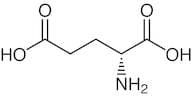
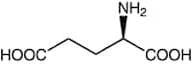
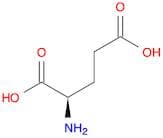
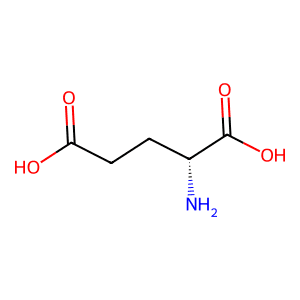
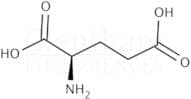
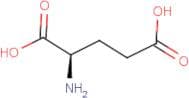
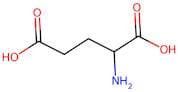
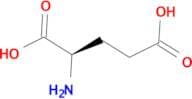
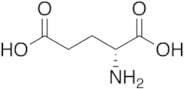
CAS 6893-26-1
:(-)-Glutamic acid
- (-)-Glutamic acid
- (2R)-2-Aminopentanedioic acid
- (2R)-2-ammoniopentanedioate
- (2R)-Glutamic acid
- (R)-(-)-Glutamic acid
- <span class="text-smallcaps">D</span>-(-)-Glutamic acid
- Acide D-glutamique
- D-2-Aminoglutaric acid
- D-Glutaminic acid
- D-Glutaminsaure
- Glutamic acid, <span class="text-smallcaps">D</span>-
- Glutamic acid, D-
- H-D-Glu-OH
- Nsc 77686
- acido D-glutamico
- D(-)-Glutamic acid
- D-(-)-Glutamic acid
- D-Glutamic acid
- (R)-1-AMINOPROPANE-1,3-DICARBOXYLIC ACID
- D-GLU
- d-glutamicaci
- D-ALPHA-AMINOGLUTARIC ACID
- D-GLUTAMIC ACID, 99+%
- D-Glutaminsure
- [R]-2-AMINOPENTANEDIOIC ACID
- d-glutamic
- (R)-2-AMINOGLUTARIC ACID
- D-2-AMINOPENTANEDIOIC ACID
- D-Glutamate
- See more synonyms
D-Glutamic Acid
CAS:Formula:C5H9NO4Purity:>98.0%(T)Color and Shape:White powder to crystalMolecular weight:147.13D-Glutamic acid, 99+%
CAS:D-Glutamic acid acts as a superior to alpha ketoglutarate. It helps in the growth of Lactobacillus arabinosus. It can inhibit the IgE binding to peanut allergens. It is widely used in pharmaceuticals and foods. This Thermo Scientific Chemicals brand product was originally part of the Alfa Aesar prodFormula:C5H9NO4Purity:99+%Color and Shape:White, Crystals or powder or crystalline powderMolecular weight:147.13D-Glutamic acid
CAS:D-Glutamic acid ((R)-Glutamic acid), the enantiomer of L-glutamic acid, is widely used in medicine and food.Formula:C5H9NO4Purity:99.24% - 99.33%Color and Shape:Orthorhombic Plates From Dilute Alcohol White Crystals Or Crystalline PowderMolecular weight:147.13D-Glutamic acid
CAS:Formula:C5H9NO4Purity:99.0 - 101.0 %Color and Shape:White to almost white powderMolecular weight:147.13(2R)-2-Aminopentanedioic acid
CAS:(2R)-2-Aminopentanedioic acidPurity:98%Molecular weight:147.13g/molD-Glutamic Acid
CAS:D-Glutamic AcidFormula:C5H9NO4Purity:98%Color and Shape: white powderMolecular weight:147.13g/molH-D-Glu-OH
CAS:M02964 - H-D-Glu-OH
Formula:C5H9NO4Purity:97%Color and Shape:SolidMolecular weight:147.13D-Glutamic Acid
CAS:Applications D-Glutamic Acid is the unnatural (R)-enantiomer of Glutamic Acid, a non-essential amino acid. Its salt form (glutamate) is an important neurotransmitter that plays a key role in long-term potentiation and is important for learning and memory. Glutamic Acid is also a key molecule in cellular metabolism.
References McEntee, W. et al.: Psychopharmacology, 111, 391 (1993); Manev, H. et al.: Mol. Pharmacol., 36, 106 (1989);Formula:C5H9NO4Color and Shape:NeatMolecular weight:147.13Glutamic acid
CAS:Glutamic acid is a non-essential amino acid that is present in all cells. It is one of the most abundant amino acids and plays an important role in the biochemical properties and biological properties of living organisms. Glutamic acid has been found to be an important neurotransmitter and is involved in neuronal activity, which can lead to death. It also has been shown to be a potent inhibitor of DNA polymerase, which may explain the structural analysis of glutamic acid as a divalent cation coordination-activator molecule. Glutamate can be used as a model system for studying glutamate receptor function and its optimum concentration is determined using vitro assays. The dinucleotide phosphate (NADPH) oxidase pathway may be involved in the toxicity of glutamic acid as it produces reactive oxygen species.
Formula:C5H9NO4Purity:Min. 95%Color and Shape:White PowderMolecular weight:147.13 g/molD-Glutamic Acid extrapure CHR, 99%
CAS:Formula:C5H9NO4Purity:min. 99%Color and Shape:White, Crystalline powder, Clear, ColourlessMolecular weight:147.13