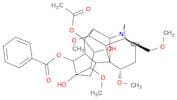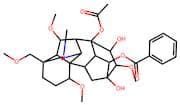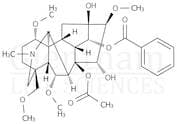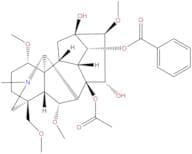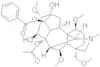
CAS 6900-87-4
:Hypaconitine
Description:
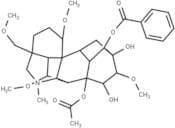
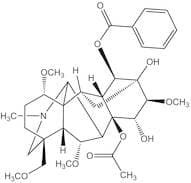
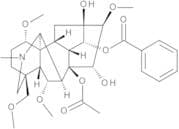
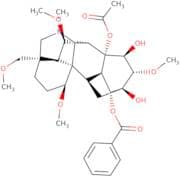
Hypaconitine is a potent alkaloid derived from the plant genus Aconitum, commonly known as monkshood or wolfsbane. It is characterized by its complex molecular structure, which includes multiple rings and nitrogen atoms, contributing to its pharmacological properties. Hypaconitine is known for its neurotoxic effects, primarily acting on the nervous system by blocking sodium channels, which can lead to symptoms such as muscle paralysis and cardiovascular disturbances. This compound is typically found in various Aconitum species and has been studied for its potential medicinal properties, although its toxicity limits its therapeutic use. In terms of physical properties, hypaconitine is usually a white to pale yellow crystalline solid, and it is soluble in organic solvents but has limited solubility in water. Due to its toxic nature, handling hypaconitine requires caution, and it is important to adhere to safety protocols when working with this substance in a laboratory setting.
Formula:C33H45NO10
InChI:InChI=1S/C33H45NO10/c1-17(35)44-33-21-19(14-31(38,28(42-6)26(33)36)27(21)43-29(37)18-10-8-7-9-11-18)32-20(40-4)12-13-30(16-39-3)15-34(2)25(32)22(33)23(41-5)24(30)32/h7-11,19-28,36,38H,12-16H2,1-6H3/t19-,20+,21-,22+,23+,24-,25-,26+,27-,28+,30+,31-,32+,33-/m1/s1
InChI key:InChIKey=FIDOCHXHMJHKRW-FBYRGYIKSA-N
SMILES:O(C)[C@@H]1[C@]23[C@]4([C@]5([C@@](OC(C)=O)([C@@]6([C@]2(N(C)C[C@@](COC)([C@]3([C@H]6OC)[H])CC1)[H])[H])[C@@H](O)[C@H](OC)[C@@](O)(C4)[C@@H]5OC(=O)C7=CC=CC=C7)[H])[H]
Synonyms:- (16Beta)-8-(Acetyloxy)-13,15-Dihydroxy-1,6,16-Trimethoxy-4-(Methoxymethyl)-20-Methylaconitan-20-Ium-14-Yl Benzoate Bromide
- (6Alpha,14Alpha,15Alpha,16Beta)-8-(Acetyloxy)-13,15-Dihydroxy-1,6,16-Trimethoxy-4-(Methoxymethyl)-20-Methylaconitan-14-Yl Benzoate
- 2H-12,3,6a-Ethanylylidene-7,9-methanonaphth[2,3-b]azocine, aconitane-8,13,14,15-tetrol deriv.
- 8-(Acetyloxy)-13,15-Dihydroxy-1,6,16-Trimethoxy-4-(Methoxymethyl)-20-Methylaconitan-14-Yl Benzoate
- Aconitane-8,13,14,15-tetrol, 1,6,16-trimethoxy-4-(methoxymethyl)-20-methyl-, 8-acetate 14-benzoate, (1α,6α,14α,15α,16β)-
- Hypaconitine
Sort by
Purity (%)
0
100
|
0
|
50
|
90
|
95
|
100
Found 8 products.
Hypaconitine
CAS:Hypaconitine (HA), an active and highly toxic constituent derived from Aconitum species, is widely used to treat rheumatism, the hepatic cytochrome P450-catalyzed metabolism of HA.Formula:C33H45NO10Purity:95%~99%Color and Shape:White powderMolecular weight:615.72Hypaconitine
CAS:Hypaconitine, an active and highly toxic constituent derived from Aconitum species, has anti-inflammatory activity, is widely used to treat rheumatism.
Formula:C33H45NO10Purity:98.75% - 99.63%Color and Shape:SolidMolecular weight:615.71Hypaconitine
CAS:Natural alkaloidFormula:C33H45NO10Purity:≥ 90.0 % (HPLC)Color and Shape:PowderMolecular weight:615.72Hypaconitine
CAS:Controlled ProductApplications An Aconitine (A189875) analog. Aconitine alkaloid pharmacokinetic analgesic. A highly poisonous, neurotoxic alkaloid.
Not a dangerous good if item is equal to or less than 1g/ml and there is less than 100g/ml in the package
References Li, M., et al.: J. Pharm. Biomed. Anal., 53, 1063 (2010), Yan, G., et al.: J. Pharm. Biomed. Anal., 53, 421 (2010),Formula:C33H45NO10Color and Shape:NeatMolecular weight:615.71Hypaconitine
CAS:Hypaconitine is a toxic alkaloid, which is an active constituent derived from certain Aconitum species of the Ranunculaceae family. These plants, often referred to as monkshood or wolfsbane, are traditionally used in herbal medicine but are notorious for their toxic properties. The alkaloid is sourced primarily from the roots and tubers of these plants and consists of several nitrogen-containing compounds.Formula:C33H45NO10Purity:Min. 98 Area-%Color and Shape:PowderMolecular weight:615.71 g/mol