CAS 691-60-1
:Isopropylurea
Description:
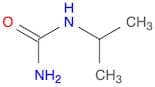
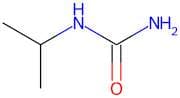
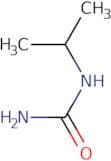
Isopropylurea, with the CAS number 691-60-1, is an organic compound that belongs to the class of ureas. It is characterized by its chemical structure, which features a urea functional group (NH2)2CO, with an isopropyl group (C3H7) attached to the nitrogen atom. This compound typically appears as a white crystalline solid and is soluble in water and various organic solvents. Isopropylurea is known for its applications in agricultural chemistry, particularly as a herbicide and plant growth regulator. Additionally, it can serve as an intermediate in organic synthesis and may exhibit biological activity, making it of interest in pharmaceutical research. The compound's stability and reactivity can be influenced by environmental factors such as pH and temperature. Safety data indicates that, like many chemical substances, it should be handled with care, following appropriate safety protocols to minimize exposure and environmental impact.
Formula:C4H10N2O
InChI:InChI=1S/C4H10N2O/c1-3(2)6-4(5)7/h3H,1-2H3,(H3,5,6,7)
InChI key:InChIKey=LZMATGARSSLFMQ-UHFFFAOYSA-N
SMILES:N(C(C)C)C(N)=O
Synonyms:- (1-Methylethyl)urea
- (Propan-2-yl)urea
- 1-Isopropylurea
- 1-Propan-2-Ylurea
- Ai3-52666
- Brn 1743048
- N-(1-Methylethyl)urea
- N-Isopropylurea
- Nsc 14349
- Urea, (1-methylethyl)-
- Urea, N-(1-methylethyl)-
- Urea, isopropyl-
- 4-04-00-00521 (Beilstein Handbook Reference)
- Isopropylurea
- See more synonyms
Sort by
Purity (%)
0
100
|
0
|
50
|
90
|
95
|
100
Found 4 products.
Isopropyl-urea
CAS:Isopropyl-urea is a cancer drug that inhibits the growth of cancer cells. It is an inhibitor of protein synthesis and suppresses the activity of pyrimidine compounds such as uracil, cytosine, and thymine. Isopropyl-urea has been shown to have potential anticancer properties, inhibiting the growth of cancer cells in vitro and in vivo. This compound also has an anti-inflammatory effect by inhibiting the production of inflammatory cytokines (e.g., TNF-α) and prostaglandins. Isopropyl-urea binds to amine receptors on the surface of cells to inhibit their activity. The nitrogen atoms in this compound are essential for its biological effects as they are responsible for its conformational properties and hydrogen bonding with other molecules.
Formula:C4H10N2OPurity:Min. 95%Molecular weight:102.14 g/mol