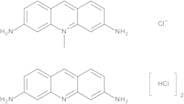
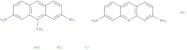
CAS 69235-50-3
:Acriflavine, hydrochloride
Description:
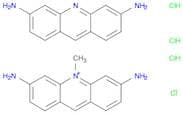
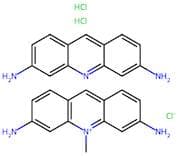
Acriflavine hydrochloride is a synthetic compound that belongs to the acridine family, characterized by its bright yellow color and antiseptic properties. It is primarily known for its use as a topical antiseptic and in veterinary medicine for treating infections. The compound exhibits antibacterial and antifungal activities, making it effective against a range of microorganisms. Acriflavine hydrochloride is soluble in water and alcohol, which facilitates its application in various formulations. Its mechanism of action involves intercalating into DNA, thereby inhibiting nucleic acid synthesis and disrupting cellular processes in pathogens. Additionally, it has been studied for potential applications in cancer research due to its ability to affect cell proliferation. However, caution is advised in its use, as it can cause skin irritation and has potential mutagenic effects. Overall, acriflavine hydrochloride is a versatile chemical with significant historical and contemporary relevance in both medical and research settings.
Formula:Unspecified
Synonyms:- Acriflavine dihydrochloride
- Flavacridine hydrochloride
- Acriflavinium chloride
- Acriflavine hydrochloride
- Acriflavine, hydrochloride
Sort by
Purity (%)
0
100
|
0
|
50
|
90
|
95
|
100
Found 7 products.
Acriflavine hydrochloride
CAS:Formula:C27H28Cl4N6Purity:98%Color and Shape:SolidMolecular weight:578.3634Acriflavine hydrochloride (C.I. 46000)
CAS:Formula:C27H27Cl3N6Purity:98.5 - 105.0 % (dried substance, % of C14H14N3Cl · HCl)Color and Shape:Orange to dark orange, red or brown powderMolecular weight:541.90Acriflavine Hydrochloride (>90%)
CAS:Controlled ProductApplications Acriflavine is an topical antiseptic agent and has also been used for the treatment of external fungal infections. Dyes and metabolites.
Not a dangerous good if item is equal to or less than 1g/ml and there is less than 100g/ml in the package
References Weisman, J.L., et al.: Chem. Biol. Drug. Des., 67, 409 (2006); Sala, C., et al.: Antimicro. Agents. Chemother., 54, 4150 (2010);Formula:C27H27Cl3N6Purity:>90%Color and Shape:NeatMolecular weight:541.9Acriflavine hydrochloride
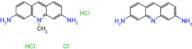
CAS:Acriflavine hydrochloride is a drug that belongs to the class of acridines, which are used as antiseptics and disinfectants. Acriflavine has been shown to have significant cytotoxic effects on mammalian cells, with a high degree of DNA binding activity. It binds to DNA in the nucleus and interferes with replication and transcription. Acriflavine hydrochloride inhibits cell division by binding to the kinetoplast (a region of mitochondrial DNA) during mitosis. This drug also has an effect on cell metabolism, decreasing ATP production and increasing lactate production in mitochondria. Acriflavine hydrochloride also prevents the formation of reactive oxygen species, which can lead to cellular damage.Formula:C27H28Cl4N6Purity:Min. 95%Color and Shape:Yellow PowderMolecular weight:578.36 g/molAcriflavine Hydrochloride (mixture of 3,6-Diamino-10-methylacridinium Chloride Hydrochloride and 3,6-Diaminoacridine Hydrochloride)
CAS:Purity:>90.0%(HPLC)Color and Shape:Orange to Brown to Dark red powder to crystal