CAS 69557-39-7
:lys-cys-thr-cys-cys-ala acetate
Description:
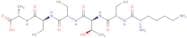
Lys-cys-thr-cys-cys-ala acetate, identified by its CAS number 69557-39-7, is a synthetic peptide composed of six amino acids: lysine (Lys), cysteine (Cys), threonine (Thr), and alanine (Ala). This peptide features a sequence that includes multiple cysteine residues, which can form disulfide bonds, contributing to its structural stability and potential biological activity. The acetate component indicates that the peptide is in its acetate salt form, which can enhance solubility in aqueous solutions. Peptides like this one are often studied for their roles in biological processes, potential therapeutic applications, and as models for understanding protein folding and function. The presence of specific amino acids suggests potential interactions with biological receptors or enzymes, making it of interest in fields such as biochemistry, pharmacology, and molecular biology. Additionally, the unique sequence may impart specific properties, such as antioxidant activity or involvement in cellular signaling pathways. Overall, lys-cys-thr-cys-cys-ala acetate represents a complex structure with diverse potential applications in research and medicine.
Formula:C24H45N7O10S3
InChI:InChI=1/C22H41N7O8S3.C2H4O2/c1-10(22(36)37)25-18(32)13(7-38)27-19(33)14(8-39)28-21(35)16(11(2)30)29-20(34)15(9-40)26-17(31)12(24)5-3-4-6-23;1-2(3)4/h10-16,30,38-40H,3-9,23-24H2,1-2H3,(H,25,32)(H,26,31)(H,27,33)(H,28,35)(H,29,34)(H,36,37);1H3,(H,3,4)
SMILES:CC(C(=O)O)N=C(C(CS)N=C(C(CS)N=C(C(C(C)O)N=C(C(CS)N=C(C(CCCCN)N)O)O)O)O)O.CC(=O)O
Synonyms:- H-Lys-Cys-Thr-Cys-Cys-Ala-OH
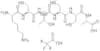
- H-Lys-Cys-Thr-Cys-Cys-Ala-Oh Trifluoroacetate Salt
Sort by
Purity (%)
0
100
|
0
|
50
|
90
|
95
|
100
Found 1 products.
H-Lys-Cys-Thr-Cys-Cys-Ala-OH trifluoroacetate salt
CAS:H-Lys-Cys-Thr-Cys-Cys-Ala-OH trifluoroacetate salt (KCTA) is a peptide that belongs to the group of thioneins and is characterized by a high content of lysine, cysteine and histidine residues. This peptide has been shown to be effective in treating subcutaneous tumors in mice. KCTA binds to metallothionein and gamma amino butyric acid (GABA), which are proteins that regulate energy metabolism in cells. KCTA has also been shown to have antimicrobial effects against human serum, which may be due to its ability to bind with thionein.
Formula:C22H41N7O8S3Purity:Min. 95%Molecular weight:627.8 g/mol