CAS 69595-02-4
:3-Furancarbonylchloride, tetrahydro-
Description:
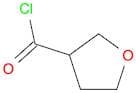
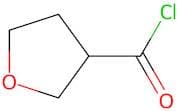
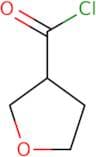
3-Furancarbonylchloride, tetrahydro- is an organic compound characterized by its furan ring structure, which is a five-membered aromatic ring containing one oxygen atom. This compound features a carbonyl group (C=O) and a chlorine atom, making it a derivative of furan with potential applications in organic synthesis and as an intermediate in the production of various chemical compounds. The presence of the carbonyl group contributes to its reactivity, allowing it to participate in nucleophilic addition reactions. The tetrahydro designation indicates that the compound may have additional saturated carbon atoms, which can influence its physical properties, such as boiling point and solubility. Generally, compounds like 3-Furancarbonylchloride, tetrahydro- are used in the synthesis of pharmaceuticals, agrochemicals, and other fine chemicals. Safety precautions should be taken when handling this compound, as it may be corrosive or harmful. Proper storage and handling in a controlled environment are essential to ensure safety and stability.
Formula:C5H7ClO2
Synonyms:- Tetrahydro-3-furancarbonylchloride
- Tetrahydro-3-furoic acid chloride
- Tetrahydro-3-furoyl chloride
Sort by
Purity (%)
0
100
|
0
|
50
|
90
|
95
|
100
Found 4 products.
TETRAHYDRO-FURAN-3-CARBONYL CHLORIDE
CAS:Formula:C5H7ClO2Purity:95%Color and Shape:LiquidMolecular weight:134.5609Tetrahydrofuran-3-carbonyl chloride
CAS:Tetrahydrofuran-3-carbonyl chloridePurity:≥95%Color and Shape:LiquidMolecular weight:134.56g/molTetrahydrofuran-3-carbonyl chloride
CAS:Formula:C5H7ClO2Purity:>95%Color and Shape:LiquidMolecular weight:134.56Tetrahydrofuran-3-carbonyl chloride
CAS:Tetrahydrofuran-3-carbonyl chloride is a chiral, stereoselective, and sustainable chemical. It is used in the synthesis of various chiral compounds with high stereospecificity. Tetrahydrofuran-3-carbonyl chloride is an imine that reacts with an amine to produce an unsymmetrical ketone. The reaction mechanism involves the formation of a mixed anhydride as the first step by reacting the amine with chlorine or bromine. In this step, the carbonyl group of the reactant becomes attached to one carbon atom of the double bond in the mixed anhydride. This reaction can be used to synthesize staudinger and stereoselectively substituted tetrahydrofurans with high selectivity.Formula:C5H7ClO2Purity:Min. 95%Molecular weight:134.56 g/mol