CAS 696-11-7
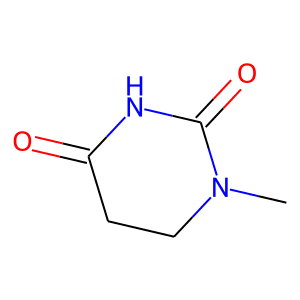
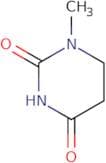
:1-methyldihydropyrimidine-2,4(1H,3H)-dione
Description:
1-Methyldihydropyrimidine-2,4(1H,3H)-dione, also known as 1-methyluracil, is a heterocyclic organic compound characterized by its pyrimidine ring structure, which features two carbonyl groups at positions 2 and 4. This compound is a derivative of uracil, with a methyl group substituent at the nitrogen atom in position 1. It is typically a white to off-white crystalline solid that is soluble in polar solvents such as water and alcohols. The presence of the carbonyl groups contributes to its reactivity, allowing it to participate in various chemical reactions, including nucleophilic substitutions and condensation reactions. 1-Methyldihydropyrimidine-2,4(1H,3H)-dione is of interest in medicinal chemistry due to its potential biological activities, including effects on nucleic acid metabolism. Additionally, it may serve as an intermediate in the synthesis of other biologically active compounds. Safety data should be consulted for handling and exposure, as with any chemical substance.
Formula:C5H8N2O2
InChI:InChI=1/C5H8N2O2/c1-7-3-2-4(8)6-5(7)9/h2-3H2,1H3,(H,6,8,9)
SMILES:CN1CCC(=NC1=O)O
Sort by
Purity (%)
0
100
|
0
|
50
|
90
|
95
|
100
Found 2 products.
1-methylhexahydropyrimidine-2,4-dione
CAS:1-methylhexahydropyrimidine-2,4-dioneFormula:C5H8N2O2Purity:≥95%Color and Shape: white crystalline powderMolecular weight:128.13g/mol1-Methyl-1,3-diazinane-2,4-dione
CAS:1-Methyl-1,3-diazinane-2,4-dione is a heterocycle that has been shown to have immunosuppressive effects. It has been shown to inhibit the production of inflammatory cells, including T cells and natural killer cells, in response to stimulation with mitogens. In addition, 1-methyl-1,3-diazinane-2,4-dione inhibits the activation of T cells by inhibiting the synthesis of β-amino acid and reducing intracellular levels of LPS. This compound also has been shown to be a potent inhibitor of HIV replication and cancer growth in vitro.Formula:C5H8N2O2Purity:Min. 95%Molecular weight:128.13 g/mol