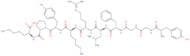
CAS 69671-17-6
:α-Neoendorphin
Description:
α-Neoendorphin is a peptide that belongs to the class of endogenous opioid peptides, which are naturally occurring in the body and play a significant role in pain modulation, stress response, and emotional regulation. It is derived from the proenkephalin precursor and is known for its affinity for opioid receptors, particularly the delta-opioid receptor. The structure of α-neoendorphin consists of a sequence of amino acids that contribute to its biological activity. This peptide exhibits analgesic properties and is involved in various physiological processes, including the regulation of mood and the modulation of the immune response. Its action is mediated through binding to opioid receptors, leading to effects such as pain relief and euphoria. Additionally, α-neoendorphin has been studied for its potential therapeutic applications in conditions like chronic pain and mood disorders. As a research chemical, it is primarily of interest in pharmacological studies and neurobiology, contributing to our understanding of the opioid system and its implications in health and disease.
Formula:Unspecified
Synonyms:- Prodynorphin-derived peptide yggflrkypk
- alpha-Neo-endorphin
- alpha-Neoendorphin
- α-Neoendorphin
- α-Neoendorphin, Prodynorphin (175-184) (human, porcine)
Sort by
Purity (%)
0
100
|
0
|
50
|
90
|
95
|
100
Found 2 products.
α-Neo-Endorphin, porcine
CAS:Custom research peptide; min purity 95%.Formula:C60H89N15O13Purity:Min. 95%Molecular weight:1,228.47 g/molAlpha-Neoendorphin
CAS:Alpha-neoendorphin (α-NE) is a protein that belongs to the class of enkephalins and is found in human skin cells. It has been shown to inhibit serine protease activity and autophagy, which are two processes that destroy cellular organelles. α-NE also inhibits adenyl cyclase, an enzyme that catalyzes the conversion of ATP into cAMP, which leads to the inhibition of energy metabolism. The mass analyzer used for this experiment was the SePhadex G-100 gel filtration chromatography column. Molecular methods were used for this experiment, such as Western blotting and immunoprecipitation.
Formula:C60H89N15O13Purity:Min. 95%Molecular weight:1,228.44 g/molRef: 3D-FN109266
Discontinued product