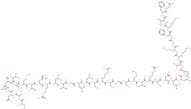
CAS 697327-12-1
:CRSP-1
Description:
CRSP-1, with the CAS number 697327-12-1, is a chemical compound that functions as a selective inhibitor of the CRISPR-associated protein 1 (CRSP-1). This compound is notable for its role in the regulation of gene expression and its potential applications in gene editing technologies. CRSP-1 is characterized by its ability to modulate transcriptional activity, making it a valuable tool in molecular biology and genetic research. The compound typically exhibits high specificity for its target, which minimizes off-target effects, a crucial aspect in therapeutic applications. Additionally, CRSP-1 may possess favorable pharmacokinetic properties, such as good solubility and stability, which enhance its utility in experimental settings. As research progresses, the understanding of CRSP-1's mechanisms and potential applications continues to evolve, highlighting its significance in the fields of genetics and biotechnology. However, detailed safety and handling information should be consulted from reliable sources before working with this compound.
Formula:C175H294N54O49S5
Synonyms:- CRSP-1
- Anti-PPAR-BP, C-Terminal antibody produced in rabbit
- activator-recruited cofactor,205 kDa
- DRIP205
- DRIP230
- ANTI-PPARBP antibody produced in mouse
- p53 regulatory protein RB18A
- MED1
- ARC205
- CRSP200
- PPARBP
Sort by
Purity (%)
0
100
|
0
|
50
|
90
|
95
|
100
Found 2 products.
CRSP-1
CAS:Central CT receptor agonist, 350x stronger than CT, no CGRP or adrenomedullin action, inhibits osteoclasts, affects rat feeding, body temp, and calcium.Formula:C175H294N54O49S5Purity:98%Color and Shape:SolidMolecular weight:4098.88CRSP-1
CAS:CRSP-1 is a type I transmembrane protein expressed on the surface of antigen-presenting cells. Its expression is induced by the activation of the immune system, such as in response to blood pressure, and it has been shown to be involved in multiple biological processes. CRSP-1 has been shown to act as a receptor for colony-stimulating factor (CSF) and enhancement of osteoclast formation. It also appears to play a role in tumorigenesis, as it was found in papilloma virus infected cells and is used as an experimental model for studying these viruses. CRSP-1 also functions as a specific ligand for the influenza A virus hemagglutinin (HA) protein and is expressed on certain epithelial cells in response to influenza infection. This protein can be used as a biomarker for determining if an individual has been infected with influenza A.Formula:C175H294N54O49S5Purity:Min. 95%Molecular weight:4,099 g/mol