CAS 6975-29-7
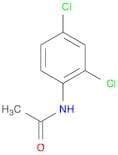
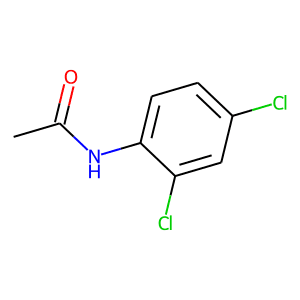
:N-(2,4-Dichlorophenyl)acetamide
Description:
N-(2,4-Dichlorophenyl)acetamide, with the CAS number 6975-29-7, is an organic compound characterized by its amide functional group. It features a dichlorophenyl moiety, which contributes to its chemical properties and potential biological activity. This compound typically appears as a solid at room temperature and is known for its moderate solubility in organic solvents, while being less soluble in water due to its hydrophobic characteristics. The presence of chlorine atoms in the phenyl ring enhances its lipophilicity and may influence its reactivity and interaction with biological systems. N-(2,4-Dichlorophenyl)acetamide is often studied for its potential applications in pharmaceuticals and agrochemicals, particularly as a herbicide or pesticide. Its synthesis generally involves the acylation of an amine with an acyl chloride or an anhydride. As with many chlorinated compounds, it is important to handle this substance with care due to potential environmental and health impacts, including toxicity and persistence in the environment.
Formula:C8H7Cl2NO
InChI:InChI=1S/C8H7Cl2NO/c1-5(12)11-8-3-2-6(9)4-7(8)10/h2-4H,1H3,(H,11,12)
InChI key:InChIKey=GZSGTFDLLISMMA-UHFFFAOYSA-N
SMILES:N(C(C)=O)C1=C(Cl)C=C(Cl)C=C1
Synonyms:- 2,4-Dichloroacetanilide
- Acetamide, N-(2,4-dichlorophenyl)-
- Acetanilide, 2′,4′-dichloro-
- N-(2,4-dichlorophenyl)acetamide
- N-Acetyl-2,4-dichloroaniline
- NSC 22365
Sort by
Purity (%)
0
100
|
0
|
50
|
90
|
95
|
100
Found 4 products.
2,4-Dichloroacetanilide
CAS:Formula:C8H7Cl2NOPurity:97%Color and Shape:SolidMolecular weight:204.05332',4'-Dichloroacetanilide
CAS:2',4'-Dichloroacetanilide is an additive that can be used in the production of various types of plates. It is a molecule that is synthesized from anilines and phosphorus pentachloride with hydrochloric acid and hydrogen sulfate. 2',4'-Dichloroacetanilide has been shown to inhibit the growth of bacteria, such as Lactobacillus plantarum and Salmonella enterica, by preventing the formation of hydrogen bonds between them. Treatment with this compound can cause regression in the growth of lettuce.Purity:Min. 95%