CAS 69839-68-5
:16-mercaptohexadecanoic acid
Description:
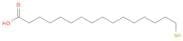
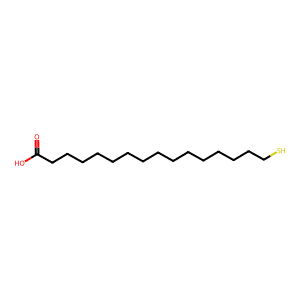
16-Mercaptohexadecanoic acid, with the CAS number 69839-68-5, is a long-chain fatty acid derivative characterized by the presence of a thiol (-SH) group at the terminal end of a hexadecanoic acid (palmitic acid) chain. This compound exhibits both hydrophobic and hydrophilic properties due to its long hydrocarbon tail and polar thiol group, making it amphiphilic. It is typically used in various applications, including surface modification, nanotechnology, and as a ligand in metal nanoparticle synthesis. The thiol group allows for strong binding to metal surfaces, facilitating the formation of self-assembled monolayers. Additionally, 16-mercaptohexadecanoic acid can participate in various chemical reactions, including oxidation and esterification, which can be exploited in organic synthesis and materials science. Its unique properties make it a valuable compound in research and industrial applications, particularly in the development of biosensors and drug delivery systems. Safety data should be consulted for handling, as thiol compounds can be reactive and may pose health risks.
Formula:C16H32O2S
InChI:InChI=1/C16H32O2S/c17-16(18)14-12-10-8-6-4-2-1-3-5-7-9-11-13-15-19/h19H,1-15H2,(H,17,18)
SMILES:C(CCCCCCCC(=O)O)CCCCCCCS
Synonyms:- 16-Sulfanylhexadecanoic Acid
Sort by
Purity (%)
0
100
|
0
|
50
|
90
|
95
|
100
Found 4 products.
16-Mercaptohexadecanoic acid
CAS:Formula:C16H32O2SPurity:97%Color and Shape:SolidMolecular weight:288.489116-Mercaptohexadecanoic Acid
CAS:<p>16-Mercaptohexadecanoic Acid</p>Purity:98%Molecular weight:288.49g/mol16-Mercaptohexadecanoic acid
CAS:<p>16-Mercaptohexadecanoic acid (16MHDA) is a fatty acid that has been shown to be an effective inhibitor of the enzyme fatty acid synthase. This enzyme is responsible for the synthesis of long-chain polyunsaturated fatty acids and their derivatives, which are key components of cell membranes and also act as signaling molecules. 16MHDA can be used in the treatment of diseases such as psoriasis, rheumatoid arthritis, and cancer. 16MHDA has been shown to have a high detection sensitivity and activity index when used in electrochemical impedance spectroscopy experiments. The x-ray diffraction data show that 16MHDA forms an acid complex with its substrate, which is thought to be the reaction mechanism. Colloidal gold has been used to study the interaction between 16MHDA and DNA duplexes. This compound was also found to have monoclonal antibody binding properties in human serum samples.</p>Formula:C16H32O2SPurity:Min. 95%Color and Shape:PowderMolecular weight:288.49 g/mol