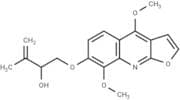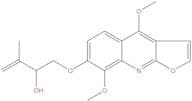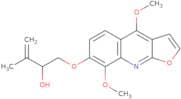
CAS 6989-38-4
:Evodine
Description:
Evodine, with the CAS number 6989-38-4, is an alkaloid primarily derived from the plant Evodia rutaecarpa, commonly known for its traditional medicinal uses. This compound exhibits a range of biological activities, including anti-inflammatory, analgesic, and potential anti-cancer properties. Evodine is characterized by its complex molecular structure, which includes multiple functional groups that contribute to its pharmacological effects. It is typically found in the form of a white to off-white crystalline powder and is soluble in organic solvents, but its solubility in water is limited. The compound's mechanism of action is believed to involve modulation of various signaling pathways, making it a subject of interest in pharmacological research. Additionally, due to its natural origin, evodine is often studied for its potential applications in herbal medicine and as a lead compound for drug development. However, further research is necessary to fully understand its efficacy and safety profile in clinical settings.
Formula:C18H19NO5
Synonyms:- (-)-1-[(4,8-Dimethoxyfuro[2,3-b]quinolin-7-yl)oxy]-3-methyl-3-buten-2-ol
- (-)-1-[(4,8-DiMethoxyfuro[2,3-b]quinolin-7-yl)oxy]
- Evodine
Sort by
Purity (%)
0
100
|
0
|
50
|
90
|
95
|
100
Found 3 products.
Evodine
CAS:1. Evodine has antinociceptive activity.Formula:C18H19NO5Purity:98%Color and Shape:SolidMolecular weight:329.35Evodine
CAS:Evodine is a natural drug that is extracted from the rhizoma gastrodiae and has been used in China as a traditional medicine for centuries. The toxicity of Evodine has been studied in animal models, with no adverse effects observed. It is also effective in decreasing pain by inhibiting the release of inflammatory mediators from nerve cells. This drug has shown to be effective against tissue culture cells and K562 cells. Evodine also inhibits the production of ATP levels in these cells, which may be caused by its effect on erythrocyte function. In vivo studies have shown that Evodine can improve glucose tolerance and increase insulin sensitivity in type 2 diabetic mice.Formula:C18H19NO5Purity:Min. 95%Molecular weight:329.35 g/mol