CAS 70006-38-1
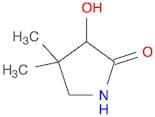
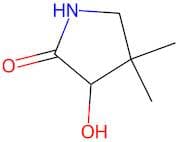
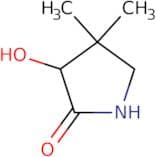
:2-Pyrrolidinone, 3-hydroxy-4,4-dimethyl-
Description:
2-Pyrrolidinone, 3-hydroxy-4,4-dimethyl- (CAS 70006-38-1) is a cyclic amide characterized by a five-membered ring structure containing a nitrogen atom. This compound features a hydroxyl group (-OH) and two methyl groups attached to the carbon backbone, contributing to its unique chemical properties. It is a colorless to pale yellow liquid with a moderate boiling point and is soluble in water and organic solvents, making it versatile for various applications. The presence of the hydroxyl group enhances its reactivity, allowing it to participate in hydrogen bonding, which can influence its solubility and interaction with other substances. This compound is often studied for its potential uses in pharmaceuticals, agrochemicals, and as a solvent or intermediate in organic synthesis. Its stability under normal conditions and ability to undergo various chemical reactions make it an interesting subject for research in both industrial and academic settings. Safety data should be consulted for handling and storage, as with any chemical substance.
Formula:C6H11NO2
Sort by
Purity (%)
0
100
|
0
|
50
|
90
|
95
|
100
Found 4 products.
3-Hydroxy-4,4-dimethylpyrrolidin-2-one
CAS:Formula:C6H11NO2Purity:95%Color and Shape:SolidMolecular weight:129.15703-Hydroxy-4,4-dimethylpyrrolidin-2-one
CAS:3-Hydroxy-4,4-dimethylpyrrolidin-2-onePurity:95%Molecular weight:129.16g/mol3-hydroxy-4,4-dimethylpyrrolidin-2-one
CAS:3-hydroxy-4,4-dimethylpyrrolidin-2-one is a dienophile that reacts with cyclopentadiene to produce a cycloadduct. It is an efficient catalyst for the production of polymers and acrylates from dienophiles. This compound can be used in a solid phase synthesis. 3-hydroxy-4,4-dimethylpyrrolidin-2-one has been shown to react with benzoic acid to produce n-substituted isoprenes. These interactions are important for nature as they are part of the biosynthesis of natural products such as hormones and vitamins.Formula:C6H11NO2Purity:Min. 95%Molecular weight:129.15 g/mol