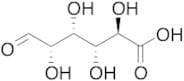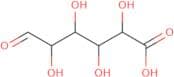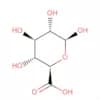
CAS 70332-45-5
:L-Glucuronic acid
Description:
L-Glucuronic acid is a naturally occurring uronic acid that plays a crucial role in the metabolism of carbohydrates and the detoxification processes in the body. It is an important component of glycosaminoglycans and is involved in the conjugation of various substances, facilitating their excretion from the body. This compound is a six-carbon sugar acid derived from glucose, characterized by the presence of a carboxylic acid group at the C6 position. L-Glucuronic acid is typically found in the form of a white crystalline powder and is soluble in water, making it readily available for biological reactions. Its structure allows it to participate in various biochemical pathways, including the formation of glucuronides, which are essential for the detoxification of drugs and xenobiotics. Additionally, L-Glucuronic acid is utilized in various industrial applications, including pharmaceuticals and cosmetics, due to its biocompatibility and functional properties. Overall, L-Glucuronic acid is a vital compound with significant biological and industrial relevance.
Formula:C6H10O7
Sort by
Purity (%)
0
100
|
0
|
50
|
90
|
95
|
100
Found 2 products.
L-Glucuronic acid sodium salt
CAS:L-Glucuronic acid sodium salt is a natural product that is used as an excipient and additive in pharmaceuticals. L-Glucuronic acid sodium salt is the sodium salt of L-glucuronic acid, which is a natural compound found in plants, animals and humans. It is used as a protective agent for drugs because it can be easily metabolized by the liver and has low toxicity. L-Glucuronic acid sodium salt inhibits the uptake of radioactive isotopes into cells, which may be due to its ability to bind to cytosolic proteins. The binding of L-glucuronic acid sodium salt to these proteins blocks the binding sites for radioactive isotopes on these proteins. This inhibition leads to reduced uptake of radioactive isotopes by cells.
Formula:C6H9NaO7Purity:Min. 95%Molecular weight:216.12 g/mol