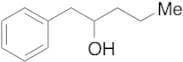
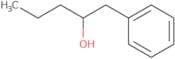
CAS 705-73-7
:α-Propylbenzeneethanol
- (±)-1-Phenyl-2-pentanol
- 1-Phenylpentan-2-Ol
- 2-Hydroxy-1-phenylpentane
- Alpha-Propylphenethyl Alcohol
- Benzeneethanol, α-propyl-
- Phenethyl alcohol, α-propyl-
- α-Propylbenzeneethanol
- α-Propylphenethyl alcohol
2-Hydroxy-1-phenylpentane
CAS:Controlled ProductApplications 2-Hydroxy-1-phenylpentane is an impurity of Prolintane (P756100) synthesis.
References Hucker, H.B. et al.: Experientia, 28, 430 (1972); Hollister, L.E. et al.: J. Clin. Pharmacol. J. New Drugs, 10, 103 (1970); Kuitunen, T. et al.: Meth. Find. Exp. Clin. Pharmacol., 6, 265 (1984):Formula:C11H16OColor and Shape:NeatMolecular weight:164.242-Hydroxy-1-phenylpentane
CAS:2-Hydroxy-1-phenylpentane is a mandelonitrile with an alcohol group. It is a cytotoxic compound that can induce apoptosis in cancer cells. 2-Hydroxy-1-phenylpentane has been shown to inhibit the growth of MDA-MB-231 breast cancer cells and induce apoptosis. In addition, this compound also induces apoptosis in rat liver cells and human fibroblasts. This compound induces apoptosis by inhibiting the phosphatidylinositol 3 kinase (PI3K)/Akt pathways. 2-Hydroxy-1-phenylpentane also inhibits cell growth through a clonogenic assay in which it was found to be toxic to mouse embryonic stem cells at concentrations greater than or equal to 50 μM, but not at concentrations less than 10 μM. The toxicity of 2-Hydroxy-1-phenylpentane may be due to its ability to bind with DNA and
Formula:C11H16OPurity:Min. 95%Molecular weight:164.24 g/mol