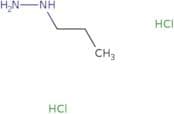
CAS 70629-59-3
:1-PROPYLHYDRAZINE
Description:
1-Propylhydrazine is an organic compound classified as a hydrazine derivative, characterized by the presence of a propyl group attached to the hydrazine moiety. It has the molecular formula C3H10N2 and features two nitrogen atoms connected by a single bond, with the propyl group contributing to its hydrophobic properties. This compound is typically a colorless to pale yellow liquid with a distinct amine-like odor. 1-Propylhydrazine is known for its reactivity, particularly as a reducing agent and in various organic synthesis applications. It can participate in hydrazine-related reactions, including those involving the formation of hydrazones and azo compounds. Due to its nitrogen content, it may also exhibit some degree of toxicity and should be handled with care, following appropriate safety protocols. Additionally, it is important to note that hydrazine derivatives can be hazardous, and their use is often regulated in many jurisdictions. Overall, 1-propylhydrazine is a compound of interest in both industrial and research settings, particularly in the fields of organic chemistry and materials science.
Formula:C3H11ClN2
Synonyms:- Hydrazine, propyl-, dihydrochloride
- 1-Propylhydrazine dihydrochloride
- PROPYL-HYDRAZINE
- Propyl-hydrazine dihydrochloride
- 1-PROPYLHYDRAZINE
Sort by
Purity (%)
0
100
|
0
|
50
|
90
|
95
|
100
Found 2 products.
propylhydrazine dihydrochloride
CAS:Formula:C3H12Cl2N2Purity:95.0%Color and Shape:SolidMolecular weight:147.04Propylhydrazine dihydrochloride
CAS:Propylhydrazine dihydrochloride is a pyrazole derivative that has been shown to have inhibitory effects on the immune system. It has been used as a treatment agent for autoimmune diseases such as rheumatoid arthritis and multiple sclerosis. Propylhydrazine dihydrochloride inhibits inflammatory responses by binding to retinoic acid receptors, blocking the production of inflammatory mediators such as prostaglandins and leukotrienes. In addition, this compound inhibits the release of histamine from mast cells, which may be due to its ability to inhibit the activity of acid receptors in these cells.Formula:C3H12Cl2N2Purity:Min. 95%Molecular weight:147.04 g/mol