CAS 709648-68-0
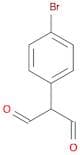
:(4-bromophenyl)propanedial
Description:
(4-Bromophenyl)propanedial, with the CAS number 709648-68-0, is an organic compound characterized by its structure, which includes a brominated phenyl group attached to a propanedial moiety. This compound features two aldehyde functional groups (-CHO) at the ends of a three-carbon chain, contributing to its reactivity and potential applications in organic synthesis. The presence of the bromine atom on the phenyl ring enhances its electrophilic character, making it useful in various chemical reactions, such as nucleophilic substitutions and coupling reactions. The compound is likely to be a solid at room temperature, with properties influenced by the bromine substituent, which can affect its solubility and melting point. Additionally, (4-bromophenyl)propanedial may exhibit biological activity, making it of interest in medicinal chemistry. Safety data should be consulted for handling, as compounds with halogen substituents can pose health risks. Overall, this compound serves as a valuable intermediate in the synthesis of more complex organic molecules.
Formula:C9H7BrO2
InChI:InChI=1/C9H7BrO2/c10-9-3-1-7(2-4-9)8(5-11)6-12/h1-6,8H
SMILES:c1cc(ccc1C(C=O)C=O)Br
Synonyms:- (4-Bromophenyl)malonaldehyde
- Propanedial, 2-(4-bromophenyl)-
Sort by
Purity (%)
0
100
|
0
|
50
|
90
|
95
|
100
Found 3 products.
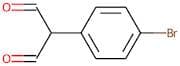
2-(4-Bromophenyl)malonaldehyde
CAS:Formula:C9H7BrO2Purity:95%Color and Shape:SolidMolecular weight:227.05472-(4-Bromophenyl)malonaldehyde
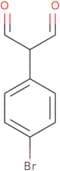
CAS:2-(4-Bromophenyl)malonaldehydeFormula:C9H7BrO2Purity:95%Color and Shape: yellow powderMolecular weight:227.05g/mol2-(4-Bromophenyl)malondialdehyde
CAS:2-(4-Bromophenyl)malondialdehyde is a bone morphogenetic protein, which is a type of protein that induces the formation of new bone. It is used as a molecular probe to evaluate the effects of drugs on microsomes and as an optimized pharmacokinetic probe. 2-(4-Bromophenyl)malondialdehyde binds to the pyrimidine ring in DNA and inhibits its synthesis. This leads to inhibition of cell proliferation, and it can be used for evaluating the effects of drugs on microsome metabolism.Formula:C9H7BrO2Purity:Min. 95%Molecular weight:227.06 g/mol