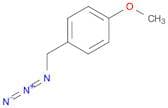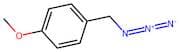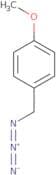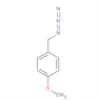
CAS 70978-37-9
:Benzene, 1-(azidomethyl)-4-methoxy-
Description:
Benzene, 1-(azidomethyl)-4-methoxy- is an organic compound characterized by its aromatic benzene ring substituted with both an azidomethyl group and a methoxy group. The presence of the azido group (-N3) introduces unique reactivity, making it a potential candidate for various chemical transformations, including click chemistry and other synthetic applications. The methoxy group (-OCH3) enhances the compound's solubility in organic solvents and can influence its electronic properties, often acting as an electron-donating group. This compound is typically colorless to pale yellow and may be volatile. It is important to handle it with care due to the potential hazards associated with azides, which can be explosive under certain conditions. The compound's applications may extend to pharmaceuticals, materials science, and as an intermediate in organic synthesis. As with any chemical, proper safety protocols should be followed when working with this substance to mitigate risks associated with its reactivity and toxicity.
Formula:C8H9N3O
Sort by
Purity (%)
0
100
|
0
|
50
|
90
|
95
|
100
Found 3 products.
Benzene, 1-(azidomethyl)-4-methoxy-
CAS:Formula:C8H9N3OPurity:97%Color and Shape:LiquidMolecular weight:163.1766Ref: IN-DA005F73
1g31.00€5g72.00€10g112.00€25g189.00€50g262.00€100g666.00€250gTo inquire500gTo inquire100mg26.00€250mg28.00€1-(azidomethyl)-4-methoxybenzene
CAS:1-(Azidomethyl)-4-methoxybenzene (1-AMMB) is a copper complex that can be used to induce the irreversible oxidation of organic molecules. 1-AMMB has been shown to be cytotoxic in vitro against MDA-MB-231 cells and MCF-7 cells. It was also shown to have anticancer activity in vivo, inhibiting tumor growth and tumor cell proliferation in mice implanted with human breast cancer cells. The anti-cancer properties of 1-AMMB are attributed to its ability to activate the copper(II) ion, which causes DNA damage by forming covalent bonds with guanine bases. This leads to the inhibition of DNA replication and transcription, which eventually kills the cell.
Formula:C8H9N3OPurity:Min. 95%Molecular weight:163.18 g/mol