CAS 71597-85-8
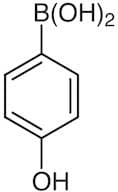
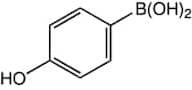
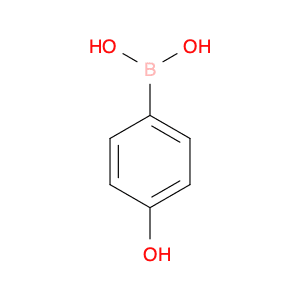
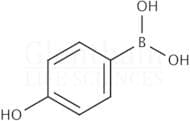
:(4-Hydroxyphenyl)boronic acid
Description:
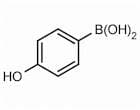
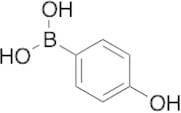
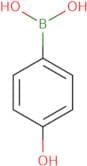
(4-Hydroxyphenyl)boronic acid, with the CAS number 71597-85-8, is an organoboron compound characterized by the presence of a boronic acid functional group attached to a para-hydroxyphenyl moiety. This compound typically appears as a white to off-white solid and is soluble in polar solvents such as water and alcohols, owing to the presence of the hydroxyl group. It exhibits properties typical of boronic acids, including the ability to form reversible complexes with diols and sugars, making it useful in various applications, particularly in organic synthesis and medicinal chemistry. The hydroxyl group enhances its reactivity and solubility, while the boronic acid functionality allows for participation in cross-coupling reactions, such as Suzuki-Miyaura coupling, which is pivotal in the formation of carbon-carbon bonds. Additionally, (4-Hydroxyphenyl)boronic acid has potential applications in the development of sensors and drug delivery systems due to its ability to interact with biological molecules. Its stability and reactivity make it a valuable compound in both research and industrial settings.
Formula:C6H7BO3
InChI:InChI=1S/C6H7BO3/c8-6-3-1-5(2-4-6)7(9)10/h1-4,8-10H
InChI key:InChIKey=COIQUVGFTILYGA-UHFFFAOYSA-N
SMILES:B(O)(O)C1=CC=C(O)C=C1
Synonyms:- (4-Hydroxyphenyl)Boronic Acid
- (p-Hydroxyphenyl)boronic acid
- 4-Boronophenol
- 4-Hydroxyphenylboronic acid
- B-(4-Hydroxyphenyl)boronic acid
- Benzeneboronic acid, p-hydroxy-
- Boronic acid, (4-hydroxyphenyl)-
- Boronic acid, B-(4-hydroxyphenyl)-
Sort by
Purity (%)
0
100
|
0
|
50
|
90
|
95
|
100
Found 9 products.
4-Hydroxyphenylboronic Acid (contains varying amounts of Anhydride)
CAS:Formula:C6H7BO3Purity:97.0 to 115.0 %Color and Shape:White to Gray to Brown powder to crystalMolecular weight:137.934-Hydroxybenzeneboronic acid, 97%
CAS:4-Hydroxybenzeneboronic acid is used for Suzuki-Miyaura coupling and Stille coupling and potential for introducing different alkyl groups, palladium-catalyzed aminocarbonylation and cross-coupling reactions, bio-supported palladium nanoparticles as phosphine-free catalyst for Suzuki reaction in wateFormula:C6H7BO3Purity:97%Color and Shape:Crystals or powder or crystalline powder or granules, White to cream to brown to grayMolecular weight:137.934-Hydroxyphenylboronic acid
CAS:Formula:C6H7BO3Purity:97%Color and Shape:SolidMolecular weight:137.92904-Hydroxybenzeneboronic acid
CAS:4-Hydroxybenzeneboronic acidFormula:C6H7BO3Purity:97%Color and Shape: white to off white solidMolecular weight:137.93g/mol4-Hydroxybenzeneboronic Acid
CAS:Controlled ProductFormula:C6H7BO3Color and Shape:NeatMolecular weight:137.934-Hydroxyphenylboronic acid
CAS:Formula:C6H7BO3Purity:98%Color and Shape:Solid, Chunks or Crystalline PowderMolecular weight:137.934-Hydroxyphenylboronic acid
CAS:4-Hydroxyphenylboronic acid is a potential anticancer agent that has been studied in vitro and in vivo. It has been shown to inhibit the activity of p-glycoprotein, which is a protein that pumps drugs out of cells, and it is also an inhibitor of lipid kinase. 4-Hydroxyphenylboronic acid binds to the ATP binding site of the enzyme and forms covalent bonds with Lys residues on the enzyme, inhibiting its function. The compound can be detected at low concentrations using fluorescence or chemiluminescence techniques. This compound may have therapeutic benefits for antimicrobial agents as well as for cancer treatment.Formula:C6H7BO3Purity:Min. 95%Color and Shape:White PowderMolecular weight:137.93 g/mol