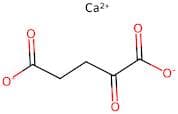
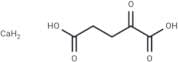
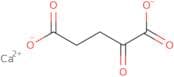
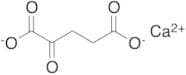
CAS 71686-01-6
:Pentanedioic acid, 2-oxo-, calcium salt (1:1)
- Calcium 2-Oxopentanedioate
- Pentanedioic acid, 2-oxo-, calcium salt (1:1)
- alpha-Ketoglutaric Acid Calcium Salt
- Calcium 2-oxoglutarate
CALCIUM α-KETOGLUTARATE MONOHYDRATE
CAS:Formula:C5H6CaO5Purity:98%Color and Shape:SolidMolecular weight:186.1761Calcium 2-oxoglutarate
CAS:Calcium 2-oxoglutarate is an intermediate in the production of GTP or ATP in the Krebs cycle. It is a reversible inhibitor of tyrosinase (IC50: 15 mM).
Formula:C5H8CaO5Purity:98%Color and Shape:SolidMolecular weight:188.192Calcium 2-oxoglutarate
CAS:Calcium 2-oxoglutarate (Ca2OG) is a metabolite of the TCA cycle and has been shown to regulate energy metabolism. It can be used as a precursor for the synthesis of glutamate, which is an important neurotransmitter in the central nervous system. Ca2OG also has inhibitory properties on many enzymes, including enzymes involved in the synthesis of amino acids and fatty acids. Ca2OG has been shown to have a role in transcriptional regulation, acting as a transcriptional activator or repressor depending on cell type and stimulus. Ca2OG also affects plant metabolism by regulating caproic acid levels. This compound is structurally similar to oxoglutarate, which is found in vivo, but it is more stable than this form of glutamic acid due to the presence of calcium ions. Ca2OG has been synthesized in vitro using x-ray crystallography and biochemical properties have been determined through various biochemical assays.br>br>
Formula:C5H4O5·CaPurity:Min 98%Color and Shape:PowderMolecular weight:184.16 g/molCalcium 2-Oxoglutarate
CAS:Controlled ProductFormula:C5H4O5CaColor and Shape:NeatMolecular weight:184.16