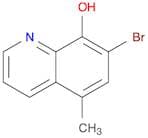
CAS 7175-09-9
:Tilbroquinol
- 5-Methyl-7-bromo-8-hydroxyquinoline
- 5-Methyl-7-bromooxine
- 7-Bromo-5-methyl-8-quinolinol
- 7-Bromo-5-methylquinolin-8-ol
- 8-Hydroxy-7-bromo-5-methylquinoline
- 8-Quinolinol, 7-bromo-5-methyl-
- Tilbroquinol [INN]
- Tilbroquinolum
- Tilbroquinolum [INN-Latin]
- Unii-P6Sb125Nha
- Tilbroquinol
- See more synonyms
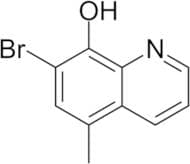
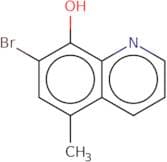
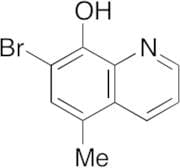
7-Bromo-5-methylquinolin-8-ol
CAS:Formula:C10H8BrNOPurity:98%Color and Shape:SolidMolecular weight:238.0806Tilbroquinol
CAS:Tilbroquinol is an antiprotozoal agent effective against amoebiasis.Formula:C10H8BrNOPurity:98%Color and Shape:SolidMolecular weight:238.08Tilbroquinol
CAS:Tilbroquinol is a coordination complex that contains a fatty acid. It is used in the treatment of bowel disease, infectious diseases, cancer and autoimmune diseases. Tilbroquinol has been shown to have broad-spectrum antimicrobial activity against bacteria such as Escherichia coli, Bacillus subtilis, Pseudomonas aeruginosa, Staphylococcus aureus and Salmonella typhimurium. It inhibits bacterial growth by inhibiting fatty acid synthesis through the inhibition of enzymes such as enoyl-acyl carrier protein reductase (ENR) and 3-hydroxyacyl-coenzyme A dehydrogenase (HAD). This drug also has anti-inflammatory properties because it is an antagonist of prostaglandin synthesis.
Formula:C10H8BrNOPurity:Min. 95%Color and Shape:PowderMolecular weight:238.08 g/molTilbroquinol
CAS:Applications Tilbroquinol is used in the synthesis of o-chloro hydroxy derivatives in pyridine and quinoline.
References Mongin, F. et al.: Tetrahedron Lett., 37, 6695 (1996);Formula:C10H8BrNOColor and Shape:NeatMolecular weight:238.08