CAS 72656-08-7
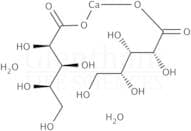
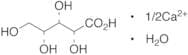
:2,3,4,5-tetrahydroxypentanoyloxycalcium(1+) hydrate
Description:
2,3,4,5-Tetrahydroxypentanoyloxycalcium(1+) hydrate, with the CAS number 72656-08-7, is a chemical compound that features a calcium ion complexed with a tetrahydroxypentanoyloxy group. This compound is characterized by its multiple hydroxyl (-OH) groups, which contribute to its hydrophilic nature and potential for forming hydrogen bonds. The presence of the calcium ion suggests that it may play a role in biological systems, particularly in processes involving calcium signaling or as a calcium supplement. The hydrate form indicates that it contains water molecules, which can influence its solubility and stability. Typically, compounds like this may be used in various applications, including pharmaceuticals, nutritional supplements, or as intermediates in chemical synthesis. Its specific properties, such as solubility, melting point, and reactivity, would depend on the precise molecular structure and the conditions under which it is studied. As with any chemical, safety data and handling precautions should be considered when working with this substance.
Formula:C5H11CaO7
InChI:InChI=1/C5H10O6.Ca.H2O/c6-1-2(7)3(8)4(9)5(10)11;;/h2-4,6-9H,1H2,(H,10,11);;1H2/q;+2;/p-1
Synonyms:- D-Xylonic acid calcium salt hydrate
Sort by
Purity (%)
0
100
|
0
|
50
|
90
|
95
|
100
Found 4 products.
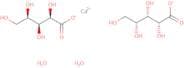
Calcium (2R,3S,4R)-2,3,4,5-tetrahydroxypentanoate
CAS:Formula:C10H18CaO12Purity:95%Color and Shape:SolidMolecular weight:370.3207D-Xylonic Acid Calcium Salt Hydrate
CAS:Controlled ProductApplications D-Xylonic Acid Calcium Salt Hydrate is a compound useful in organic synthesis.
Formula:C10H18CaO12·2H2OColor and Shape:White To Light BeigeMolecular weight:406.35D-Xylonic acid calcium salt hydrate
CAS:D-Xylonic acid calcium salt hydrate is a product that is made from the hydrolysis of cellulose. It is a byproduct of the production of d-xylose and can be used as a nutritional supplement or an additive in animal feed. D-Xylonic acid calcium salt hydrate has been shown to have an uptake rate in aerobic conditions that is ten times higher than glucose, which makes it more economical for use in the production of d-xylose. D-Xylonic acid calcium salt hydrate can be catalyzed to produce yields for d-glucose and d-xylose, which are both important monosaccharides. The catalytic process also produces d-gluconic acid and aerobic oxidation produces d-xylose, making it possible to recycle these products.Formula:C10H18O12·Ca·xH2OPurity:Min. 97%Color and Shape:White PowderMolecular weight:370.32 g/mol